SGLaw 200 Youth Forum 2026
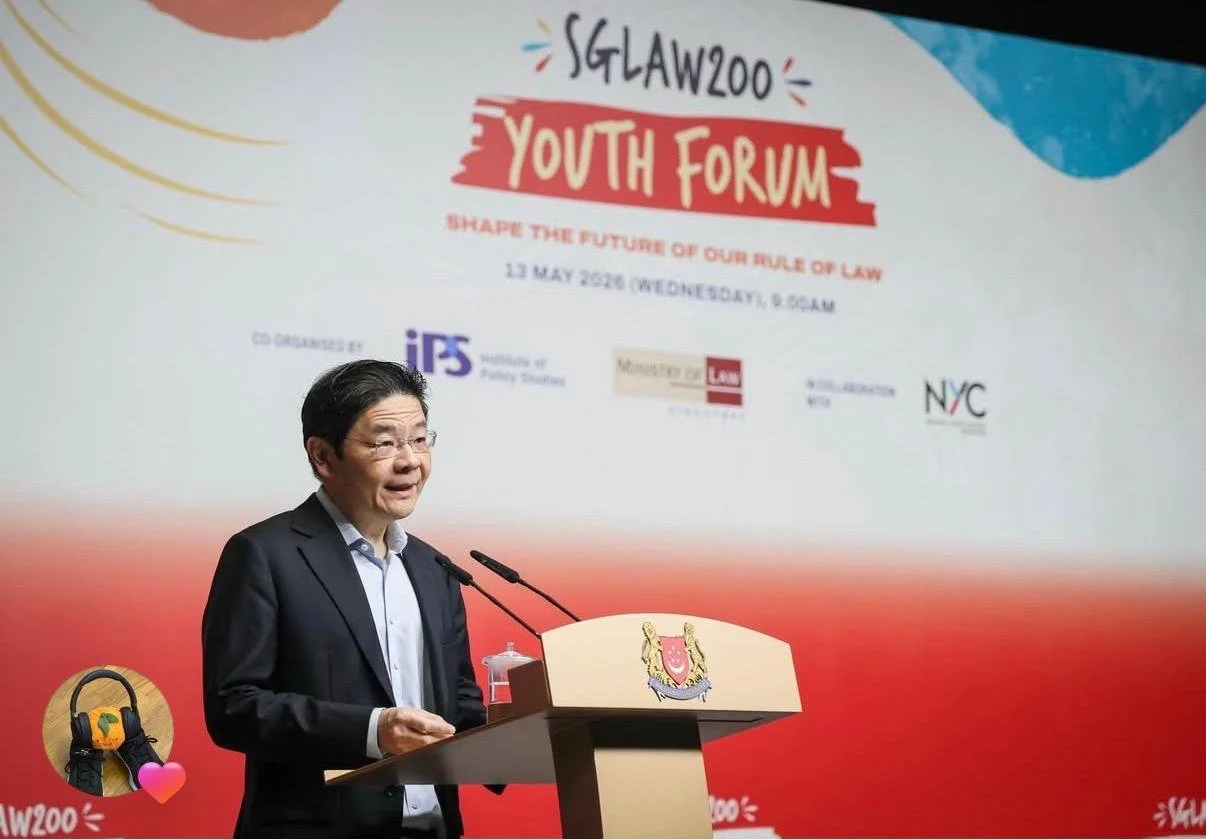
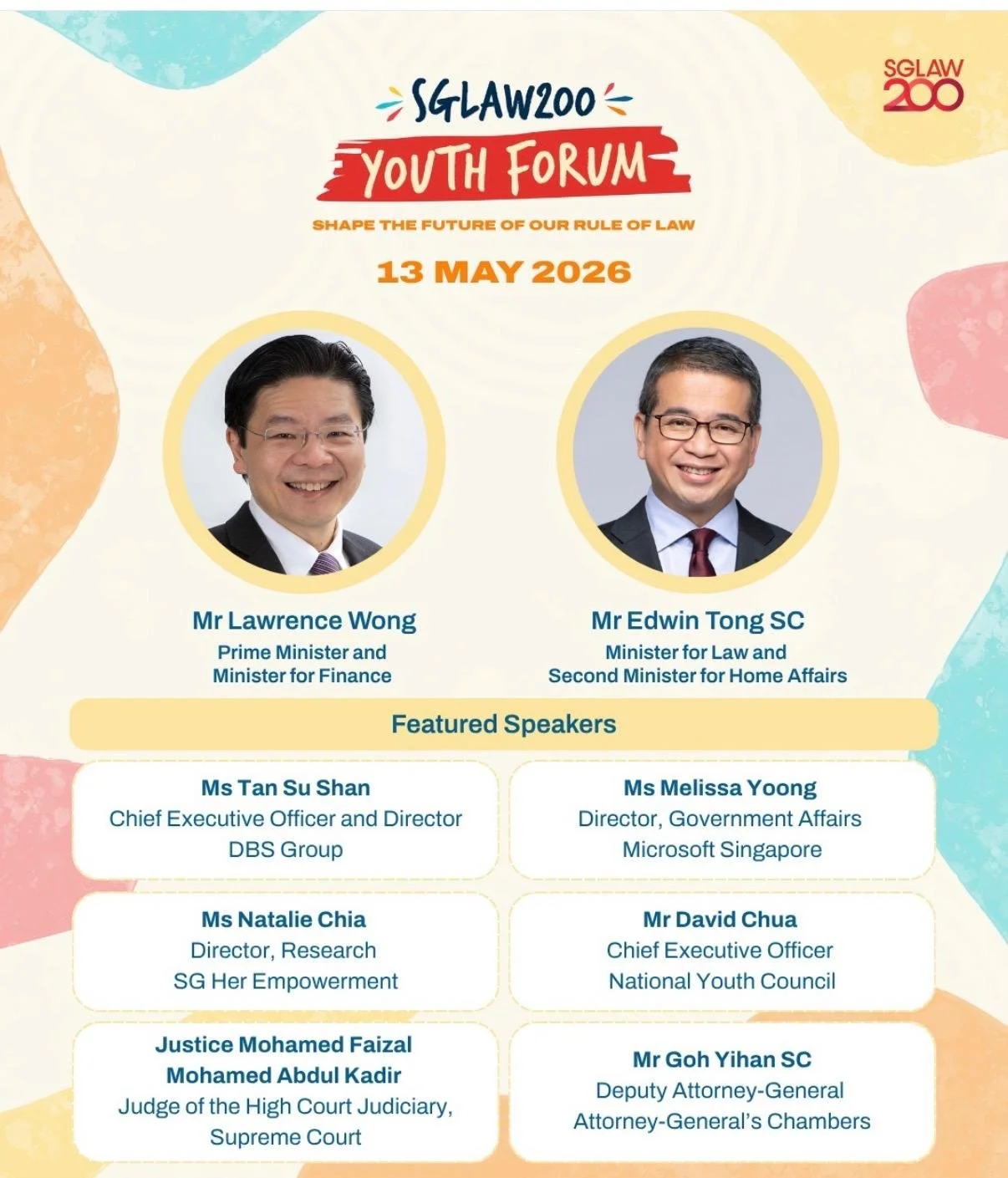
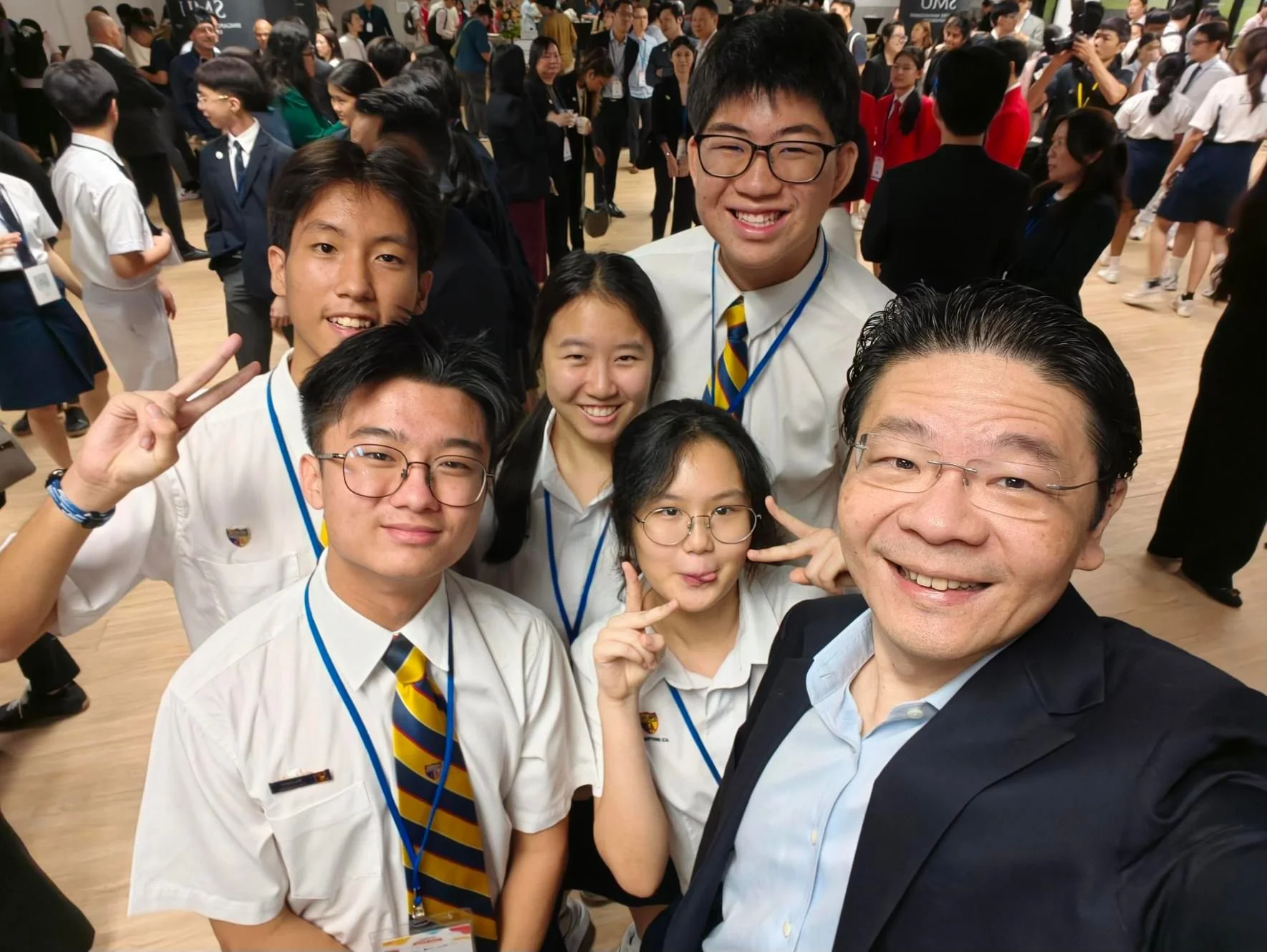
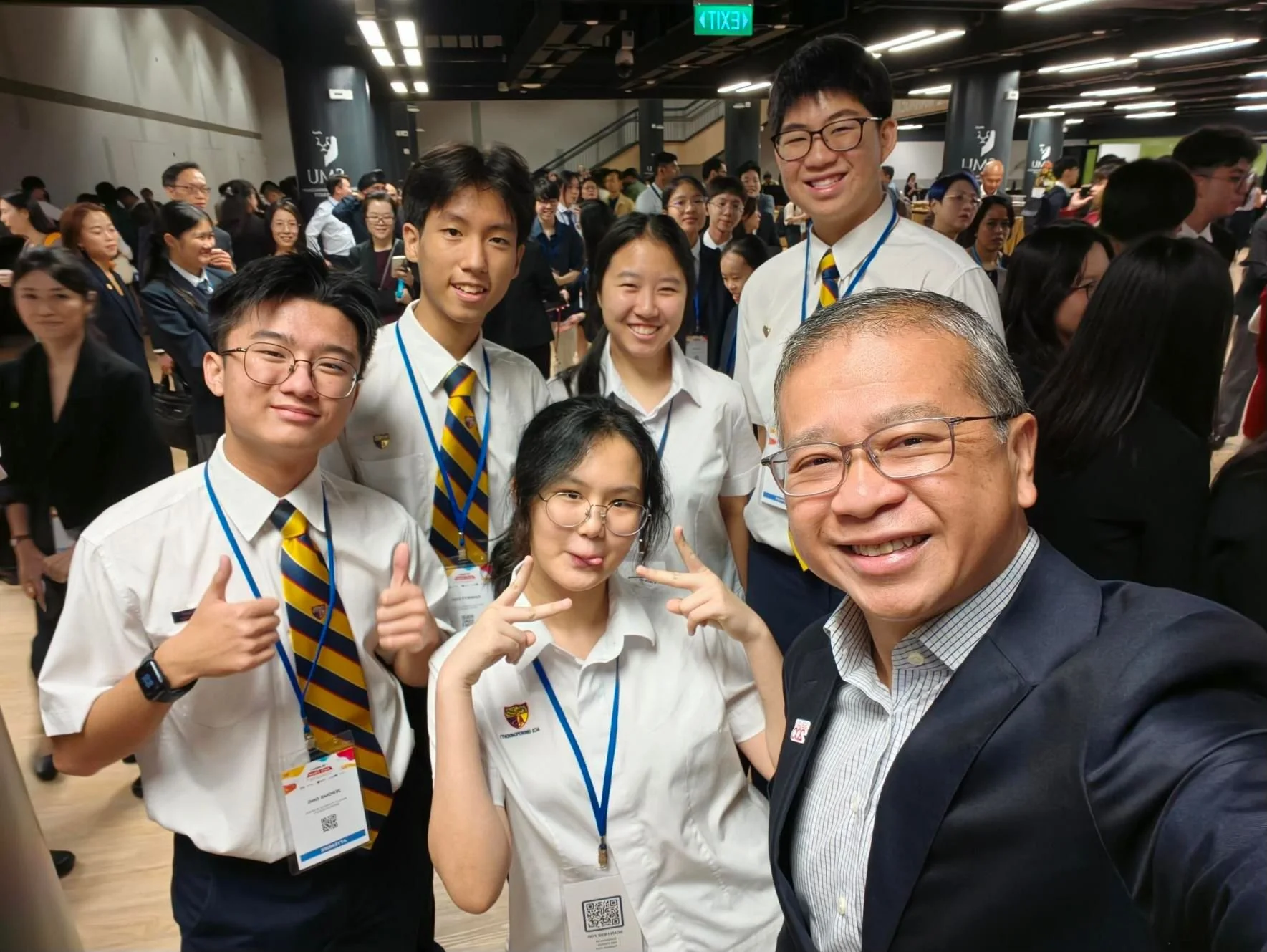
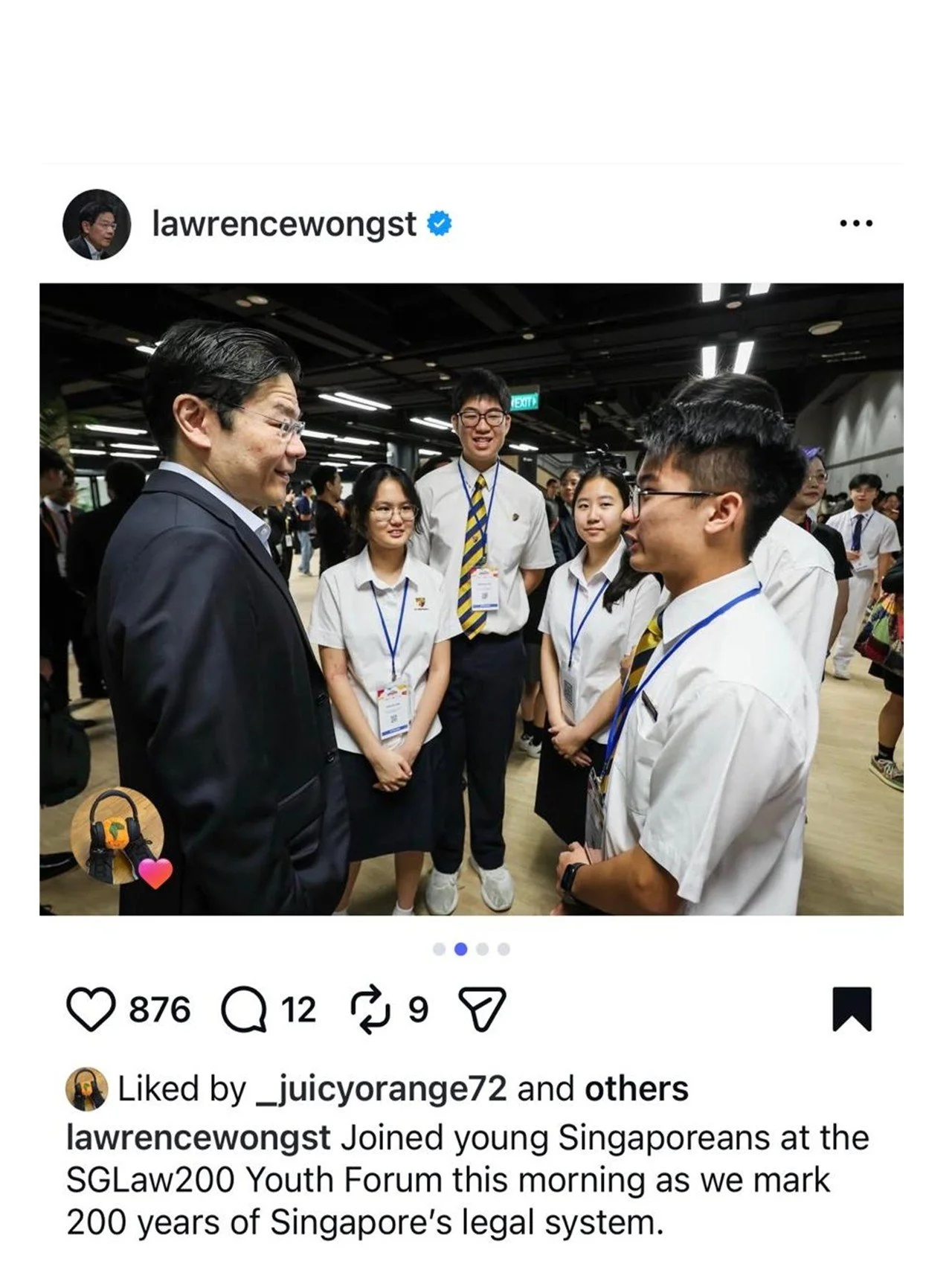
On 13 May 2026, I attended the SGLaw200 Youth Forum at the Yong Pung How School of Law, Singapore Management University. The forum was organised to mark 200 years of Singapore's modern legal and judicial system, which was established in 1826 by the Second Charter of Justice. I did not know much about that history going in. By the end of the day, 200 years did not feel like a long time.
Prime Minister Lawrence Wong opened with an address on the Rule of Law. His framing of speech online was the sharpest point for me: that Singapore's approach is not a restriction on free expression, but a recognition that words carry consequences in a diverse society, and the law has to account for that. The session that followed was on the Rule of Law and the economy. Tan Su Shan from DBS made a case I found harder to dismiss than I expected: that dispute resolution, contract enforcement, and regulatory predictability are not just principles. They are the reasons a company picks Singapore over somewhere else. I had never thought of it as competitive advantage before.
I chose Track 3 on online harms, freedom of speech, and digital citizenship. It is a space I kept running into while writing my research paper on misinformation in the Russia-Ukraine conflict. The core finding was that reactive regulation will always lag behind the problem. The question at the centre of the session is one I keep returning to: how do you build legal frameworks for a space that moves faster than legislation can? The speakers pushed further than I expected into the question of where personal responsibility ends and platform accountability begins. That line is harder to draw than most public conversations about online harms suggest.
The closing dialogue, led by Minister for Law Edwin Tong, shifted something. Less about what the Rule of Law says. More about what it actually does: not just resolving disputes after they arise, but shaping which disputes are even possible, and what the state is expected to resolve.
The law is always catching up. Every session kept returning to the same underlying reality: that the frameworks we have were built for a world that has already moved on. Speech, AI, accountability, access. Closing that gap is the work of this generation. I left thinking I want to be part of that.