Moderating the ACS(I) Economics Policy Forum 2026
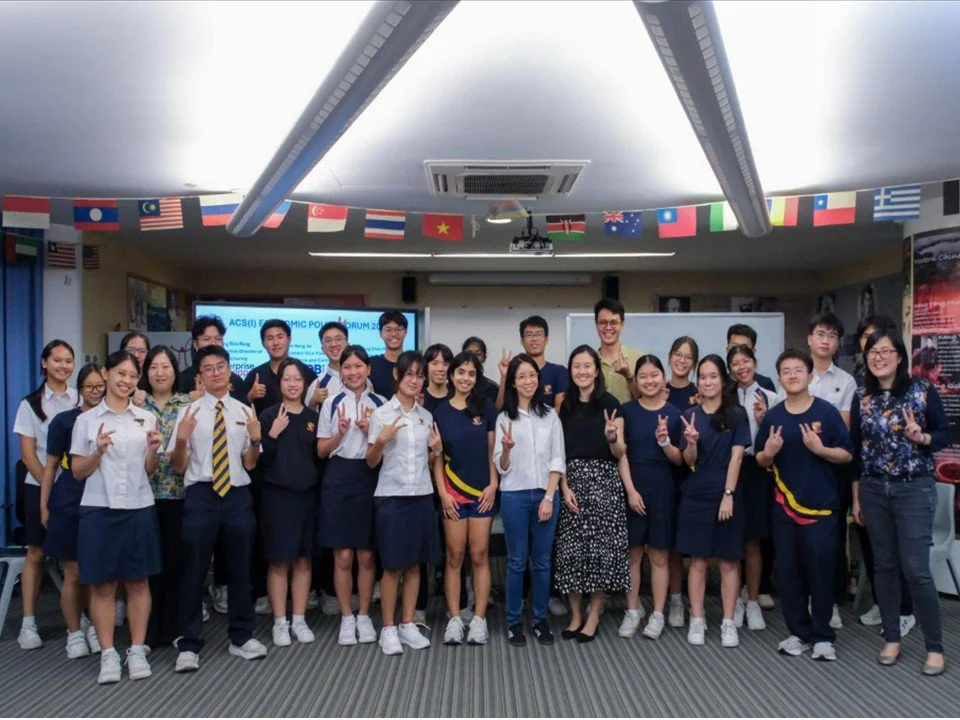
I was asked to serve as Emcee and Moderator for the ACS(I) Economics Policy Forum on 15 May 2026. Three speakers came from Enterprise Singapore, the Economic Development Board, and NTUC’s e2i, and my role was to keep the programme moving and chair the discussion. The forum was also a chance to hear directly from people shaping these policies in Singapore, and to better understand how economic decisions affect jobs, workers, investment, and the wider economy. What I did not expect was how much the experience would change the way I listened.
Being the one introducing, connecting, and asking questions makes you pay attention differently. Enterprise development, investment strategy, and labour policy can seem like separate briefs on paper, but the questions behind them are closely linked. Each speaker was looking at a different part of the same problem: how Singapore sustains an economy with almost no margin for error. The trade-offs between them are not neatly resolved. They have to be managed.
Mr Cheong Chen Ming from NTUC’s e2i was the clearest example of that. He had moved across multiple ministries before arriving at labour policy, and that breadth came through in the way he spoke. He did not talk about the tripartite model as a set of institutions. He talked about it as a set of relationships that need constant tending. That distinction matters, because workforce resilience is not something you build once. It is something you keep working at.
That idea connected to something I had first come across at the GIC-MOE programme last year: the honest answer to economic uncertainty is not better prediction, but better preparation. Singapore cannot control the global environment. What it can shape is whether its institutions hold up when things shift. That has stayed with me less as a policy insight and more as a way of thinking about government.
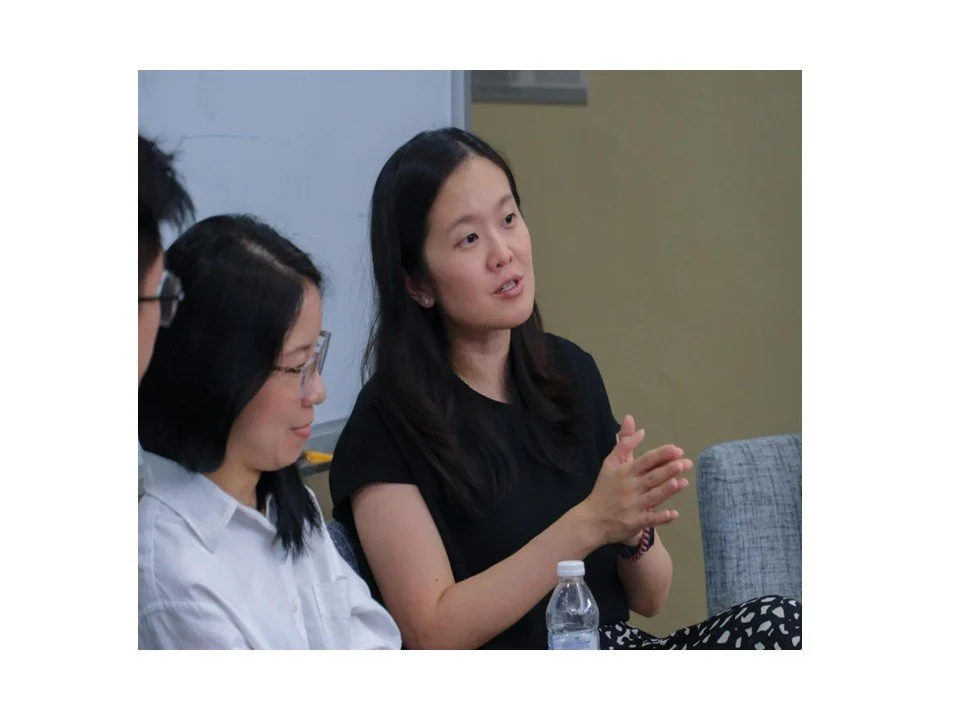
Moderating made that concrete in a way that sitting in the audience does not. Working alongside another moderator made me more alert not just to what was being said, but to what the conversation still needed. I am not sure I always got that right, but it made me more aware of how much that work actually involves. It also gave me a clearer appreciation of how economic policy is developed and evaluated in practice.