PUBLICATIONS
Writing is not just about having something to say. It is about saying it in a way that reaches people. These publications are attempts to do exactly that.
THE BOOKS
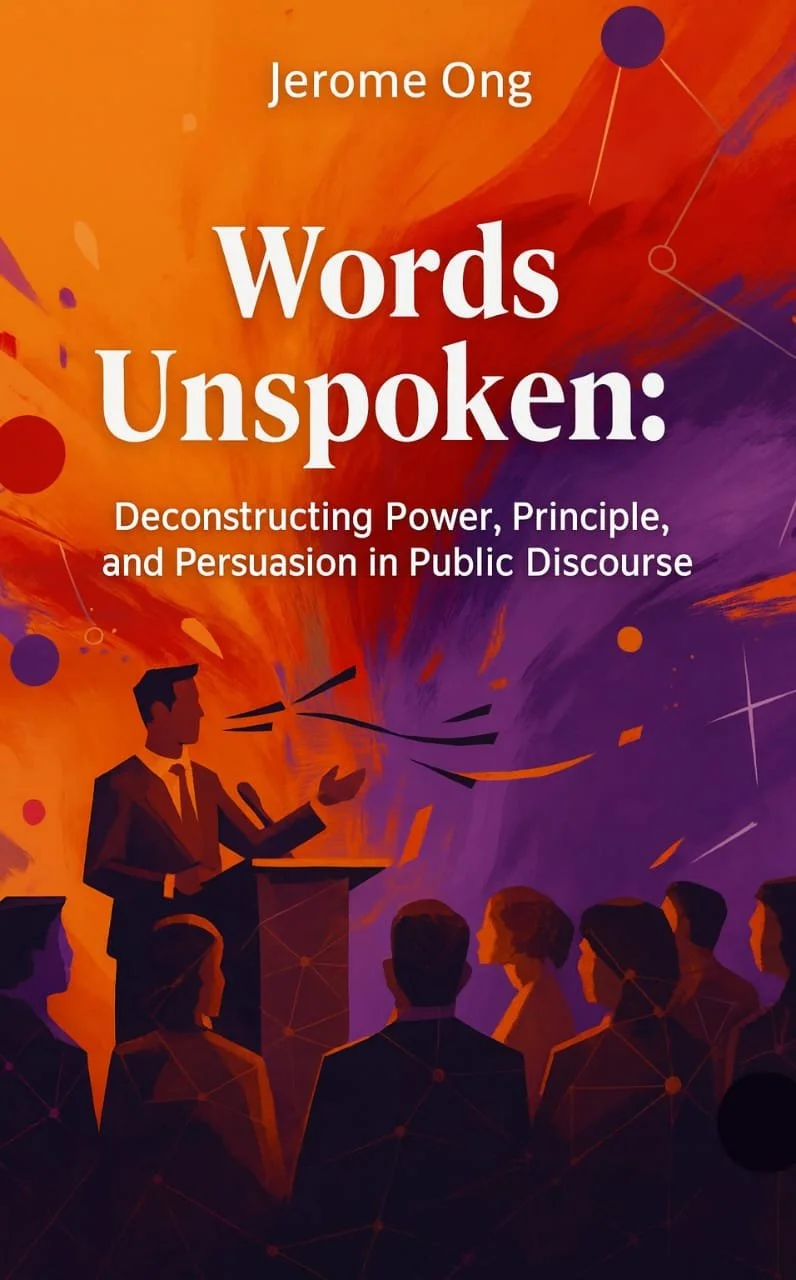
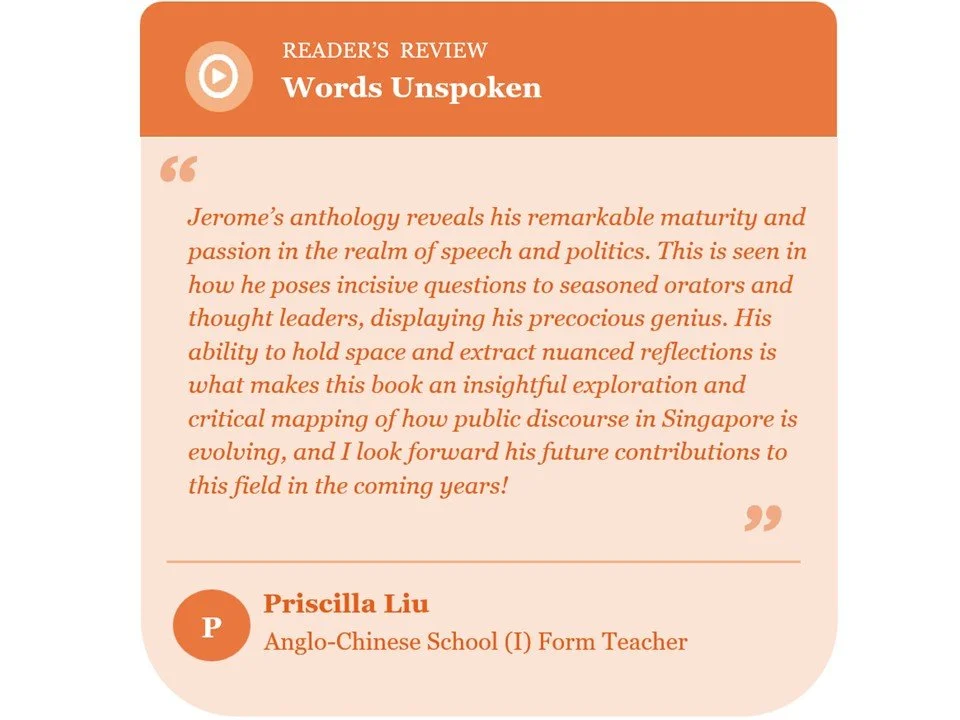
Words Unspoken is an anthology examining the role of speech in public life, drawn from conversations with politicians, journalists, academics, and consultants who have each navigated the weight of words in their own way. It begins with a question that is simple to pose but difficult to answer: what actually makes a speech matter?
The book works through that question honestly. It looks at what separates persuasion from manipulation: why some rhetoric builds genuine understanding while other rhetoric conceals, flatters, or inflames. Drawing on figures as different as Martin Luther King Jr. and Lee Kuan Yew, it shows how the same tools of emotional resonance can serve vastly different ends, and how thin the line between moral clarity and sensationalism can be.
There is also a quieter tension running through the book. It is about who gets to speak and who does not. In Singapore, especially, cultural norms place unspoken limits on public discourse around race and religion. Digital platforms have opened new channels, but tend to reward brevity over depth. Words Unspoken does not resolve these tensions so much as name them clearly, and ask what responsibility follows from having a voice at all.
What Writing It Taught Me: Working on Words Unspoken brought something into focus that I had been noticing across my community projects. The question of who gets to speak, and who gets heard, is not just a matter of confidence or cultural habit. It is built into systems. The book explores this through the lens of public life. The community projects explore it through the people sitting across from me. The question underneath both is the same one I keep coming back to.
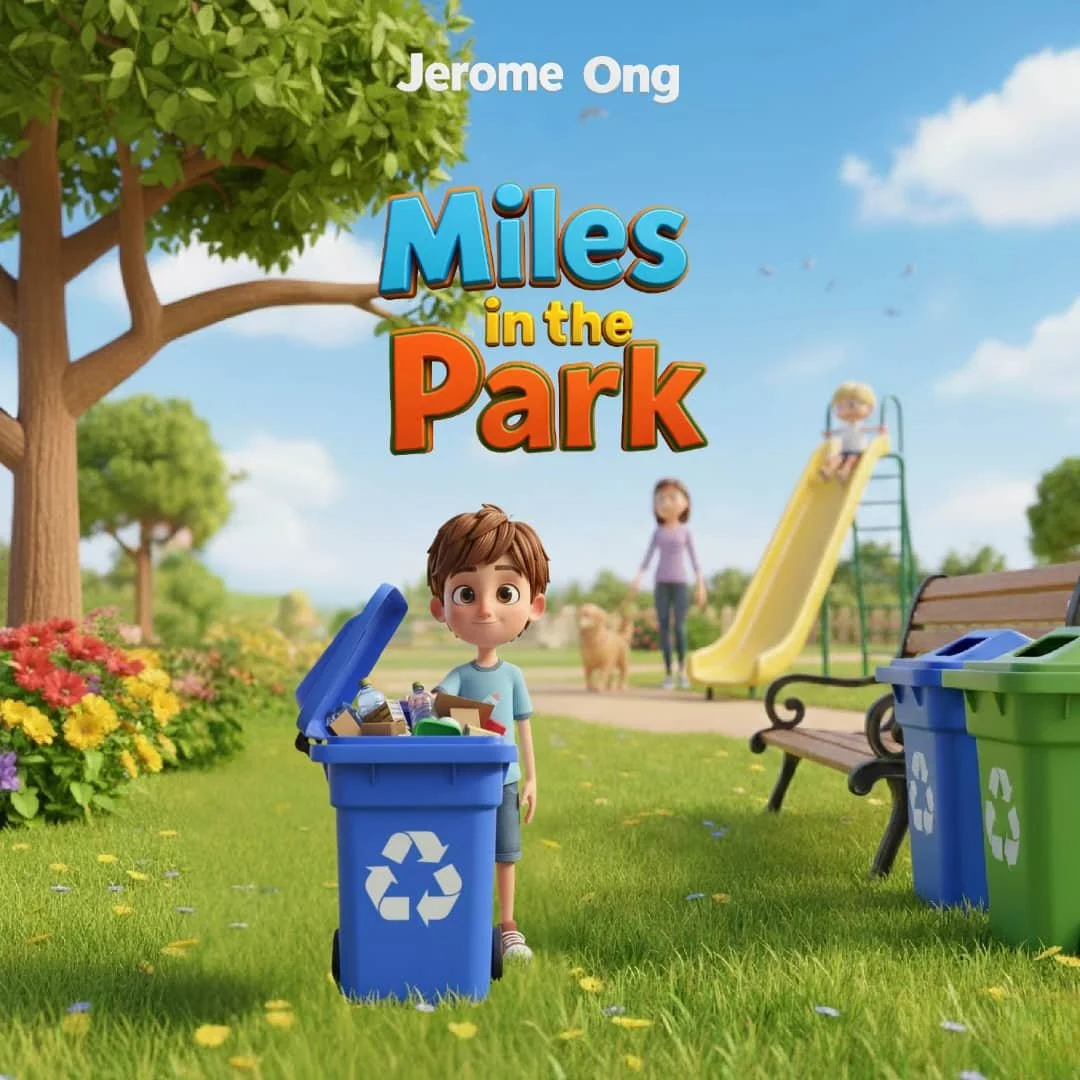
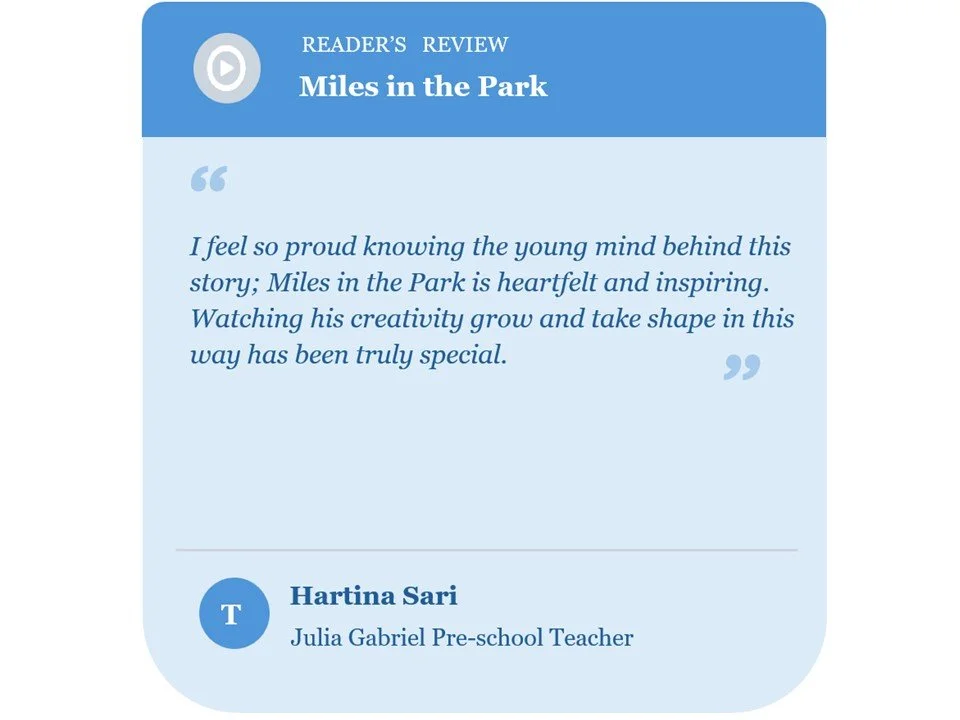
Miles in the Park is a children's picture e-book exploring the power of individual action through the journey of a young boy who discovers litter in his favourite park and decides to speak up. Written in read-aloud rhyme for early readers aged 4 to 9, it examines how even the smallest voices can influence a community and inspire collective responsibility.
Miles does not find it easy. A classmate pushes back, and for a moment, the doubt feels louder than the conviction. But a teacher's quiet encouragement is enough to keep him going. It is in that small, human exchange that the book finds its emotional core. Environmental themes like recycling and caring for shared spaces emerge naturally from the story, never as lessons to be learned, but as things Miles simply notices and cares about.
At its core, Miles in the Park raises a quietly important question: at what age does civic responsibility begin? By grounding the answer in a child's everyday experience, the story encourages young readers to see their choices — however small — as meaningful contributions to the world around them.
What Writing It Taught Me: Miles is a fictional child, but the situation he faces is one I recognise. Noticing something wrong, deciding whether to speak up, encountering resistance, and continuing anyway. That sequence plays out in real classrooms, with real students, more often than most people realise. The book is written for young readers. The question underneath it is not.
Amazon Rankings
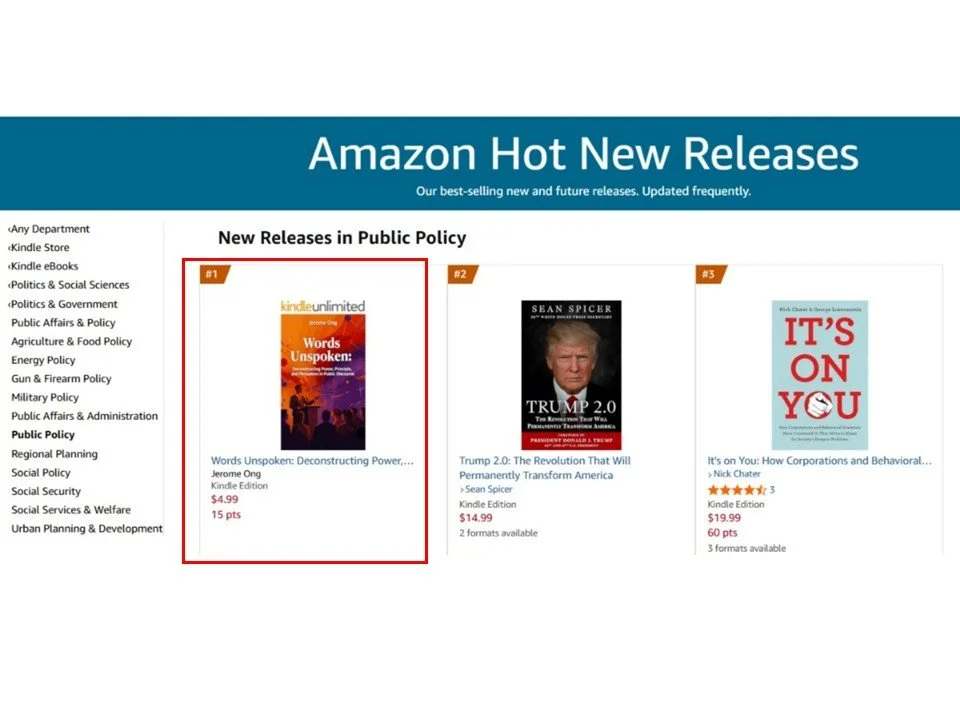
Words Unspoken – #1 Amazon Hot New Releases (Public Policy)
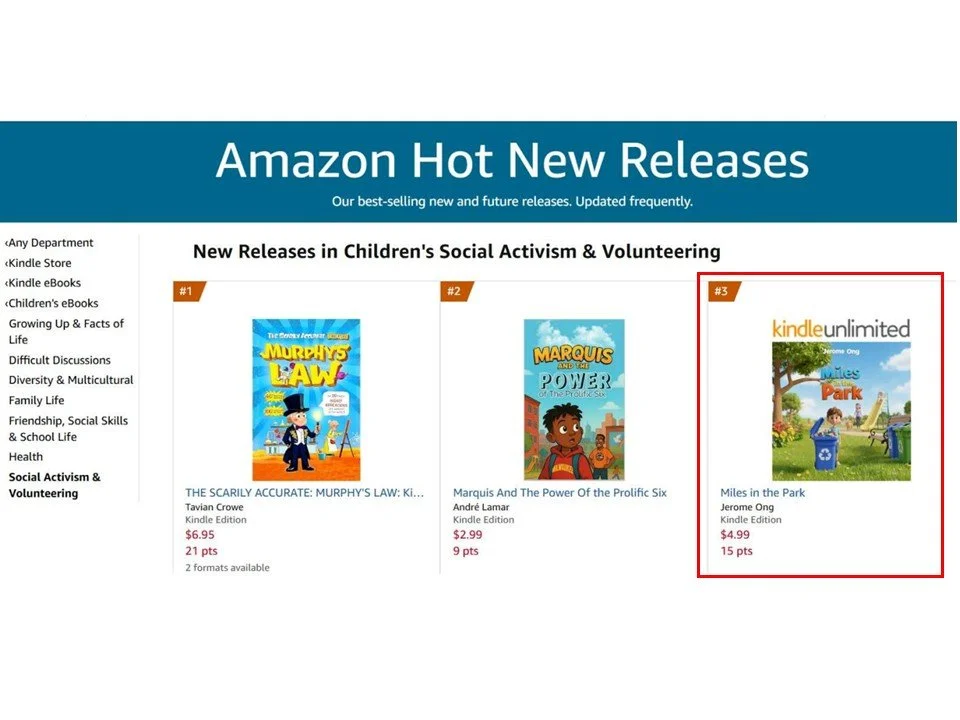
Miles in the Park – #3 Amazon Hot New Releases (Children’s Social Activism & Volunteering)
In Your Words
THE RESEARCH
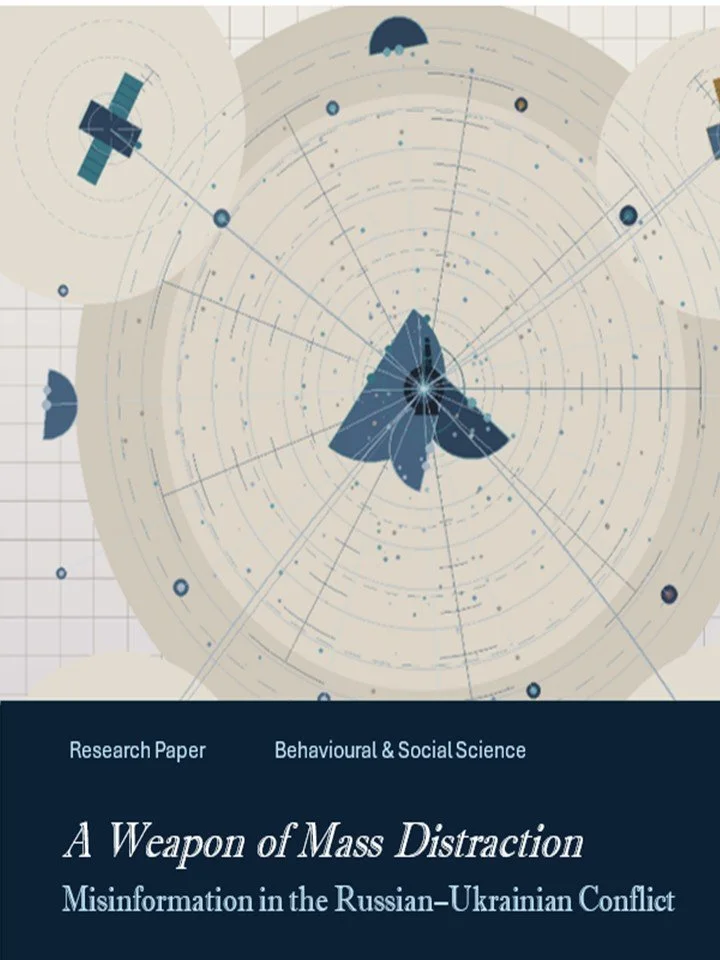
A Weapon of Mass Distraction: Misinformation in the Russian-Ukrainian Conflict
Academic Recognition
JOURNAL
International Journal of High School Research
Forthcoming in June 2026 Issue
ACCREDITATION
UC Santa Barbara
Officially accredited March 2026
CONFERENCE
International Academic Conference
Presented online February 2026
Behind The Paper
What I Investigated:
This paper started with a question I could not leave alone: why does misinformation spread faster than the truth, and what can actually be done about it?
Using the Russia-Ukraine war as its case study, the paper traces how misinformation operates across platforms, from encrypted apps like Telegram to the algorithm-driven feeds of TikTok and Instagram. It maps the specific types of misinformation used in the conflict (military and political) and the methods through which it spreads: recontextualised images, fake eyewitness accounts, and coordinated troll networks.
From there, the paper weighs the two main regulatory responses: platform self-regulation and state intervention. Both have worked to some degree. Both fall short in different ways. Self-regulation is inconsistent and shaped by profit. State regulation risks becoming a censorship tool, particularly when governments themselves are sources of misinformation. Russia's framing of its invasion as a "special military operation" is the clearest example of that risk.
The conclusion does not offer a simple fix, because there isn’t one. What it argues instead is that the misinformation crisis requires a hybrid approach: platforms as the first line of defence, state regulation reserved for high-stakes situations, and international cooperation to create standards that individual nations cannot enforce alone. Reactive regulation will always lag behind misinformation, and the only durable solution is a proactive digital environment where accuracy is structurally incentivised, not just occasionally enforced.
What This Has to Do With Everything Else:
This is where the research connects back to everything else on this site. Misinformation is, at its core, a communication problem. False narratives spread because people lack the tools, context, or confidence to interrogate what they are told. Building that capacity, in schools, in communities, and across borders, is not a separate project from fighting misinformation. It is the same project. That is what Project Flare, Project Reperio, and the work at Meet-The-People Sessions are all trying to do, from the ground up.