PROJECT FLARE
Project Flare provides disadvantaged students with public speaking education through structured workshops and curated resources. We partner with Grace Orchard School, working with students aged 7 to 18 diagnosed with Mild Intellectual Disability (MID), some of whom also have Mild Autism Spectrum Disorders (ASD). Beyond learning the power of speech, our trained volunteers equip students with essential 21st-century skills: critical thinking, effective communication and collaboration to prepare them for the future workplace. Our goal is to give every student the communication tools they need to advocate for themselves, in school, at work and in life.
BEHIND THE TITLE
Founding Project Flare taught me something no classroom has: the difference between having a good idea and actually making it work. The title was the easy part. In practice, it meant building everything from the ground up. A Founding Team of three, an EXCO of six, a team of volunteers that has grown to more than fifty people and then staying involved in every layer of how the project runs, which mostly means being the one responsible when things do not go to plan.
A programme has sessions. An organisation has decisions to make about which school to partner with, how to train volunteers who have never worked with neurodiverse students, what to do when a lesson falls flat, and how to face the same class the following week. The curriculum was where all of that became most real. We could not borrow a debate club format and apply it here. Every lesson had to be rebuilt from scratch with less frontal teaching and more hands-on practice, examples connected to the students' lives rather than ours. We revised constantly based on what was landing and what was not. That cycle of designing, testing, and fixing is what I mean when I say Project Flare is not just a service project. It is an attempt to build something genuinely fit for purpose and eventually, fit for scale.
OUR PARTNER
When we were looking for a school to partner with, GOS made sense immediately. The fit was not just logistical. It was philosophical. GOS serves students aged 7 to 18 diagnosed with Mild Intellectual Disability, some of whom also have Mild Autism Spectrum Disorders. Their approach centres on shaping what they call "special lives for significance." The goal is not to manage limitations but to build on strengths, and to take the long view: that every student, given the right environment and support, can grow into someone who contributes meaningfully to the world around them. That is exactly the kind of partner Project Flare needed. A school that already believes in its students' potential gave us the foundation to build something genuinely ambitious. Not charity work. A programme designed to be worthy of the students it serves.

THE MISSING PIECE
Singapore talks a lot about inclusive employment. What rarely gets discussed is what inclusion actually requires at the most basic level: the ability to communicate confidently in a professional environment.
The students at GOS are not incapable of communication. Many are sharp, curious, and genuinely engaged. What they often lack is structured exposure to the conventions of formal communication: the frameworks, the confidence, the unwritten rules that students in mainstream schools absorb without even realising it. That gap has real consequences. Employers who are willing to hire neurodiverse workers still need those workers to explain their needs, navigate workplace interactions, and advocate for themselves. Without that foundation, even the best job-matching initiative falls short.
We believe the gap can be closed, and Project Flare is our attempt to close it. Our approach is to teach communication explicitly, with real frameworks and honest feedback, until it becomes something students can genuinely rely on. Because the ability to speak up for yourself should never be the thing that holds someone back.
(i) The Workshops: Where the Work Begins
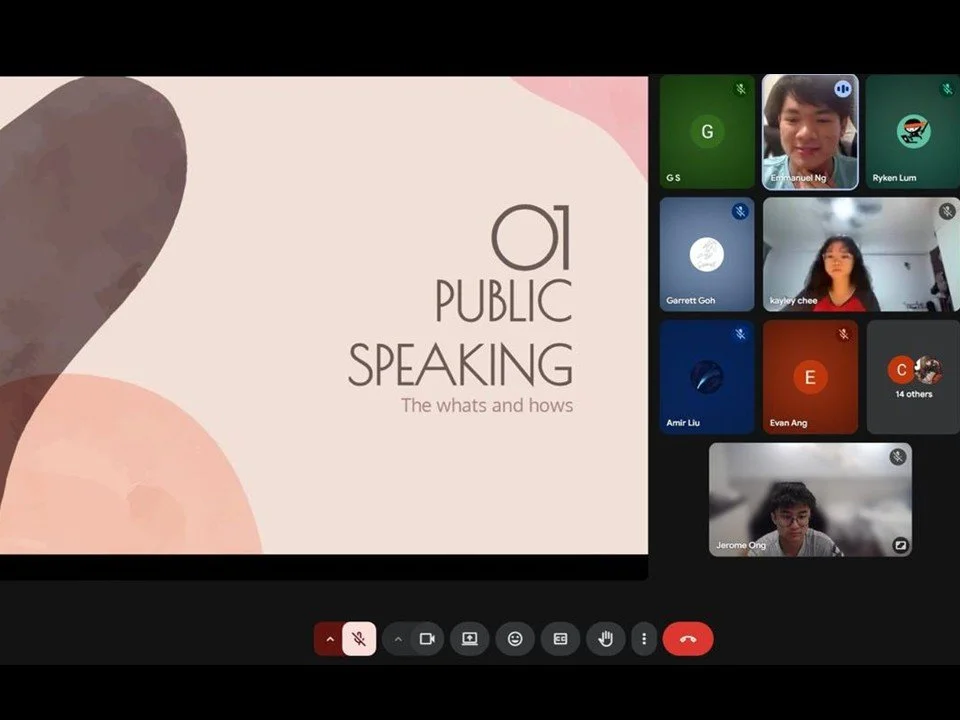
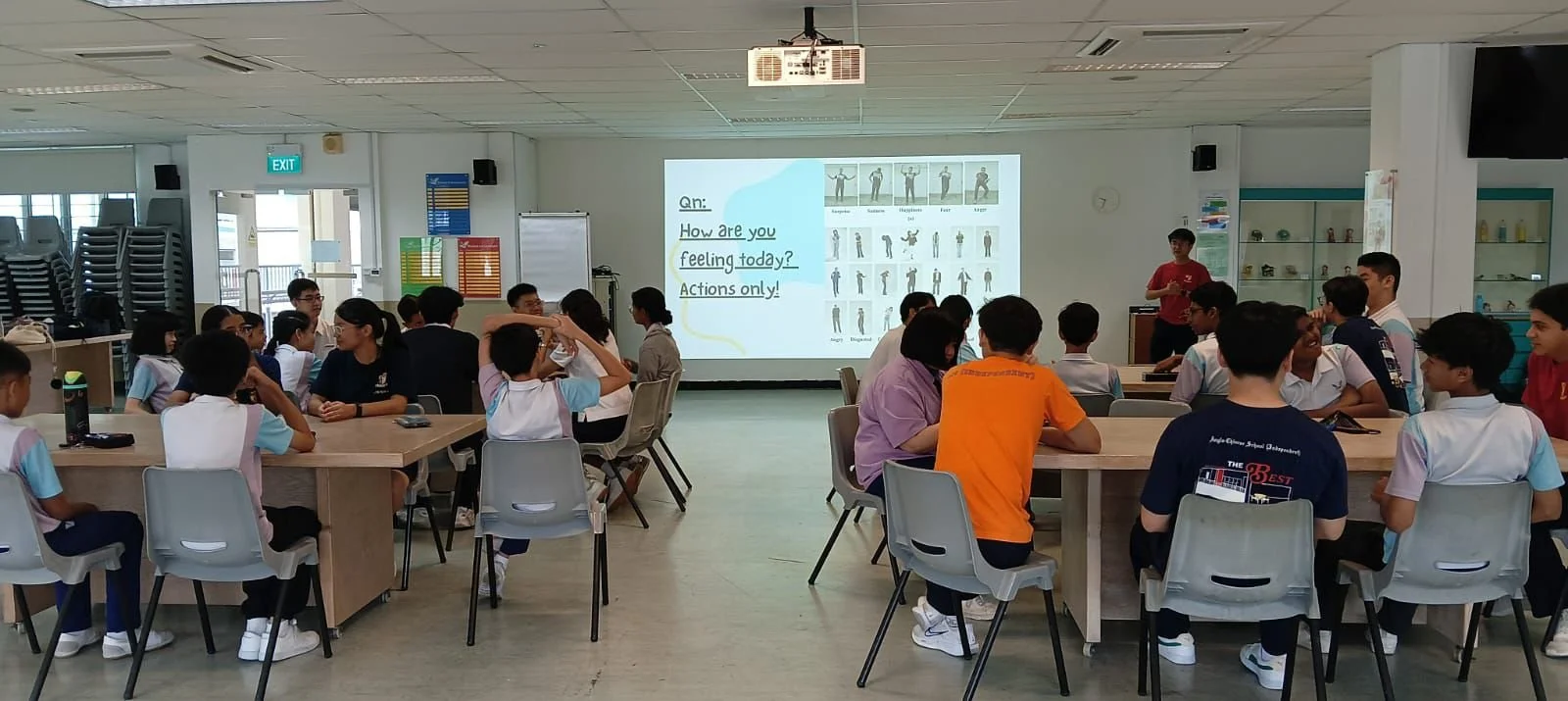
Our workshops were built around a simple insight: formal communication is not instinctive. It is learned. And for students who have never had structured exposure to it, the teaching has to be deliberate, practical, and grounded in their world. Each session introduced students to core speaking techniques (ethos, pathos, and logos) through hands-on practice rather than frontal instruction. Real-life examples replaced textbook scenarios. Students were asked to do things, not just listen. After each session, we reviewed feedback from both the ACSI and GOS teachers and adjusted. Some things worked immediately. Others needed rethinking entirely. That back-and-forth is what turned a workshop series into something the students could genuinely build on.
(ii) The Weekly Lessons: From Technique to Confidence
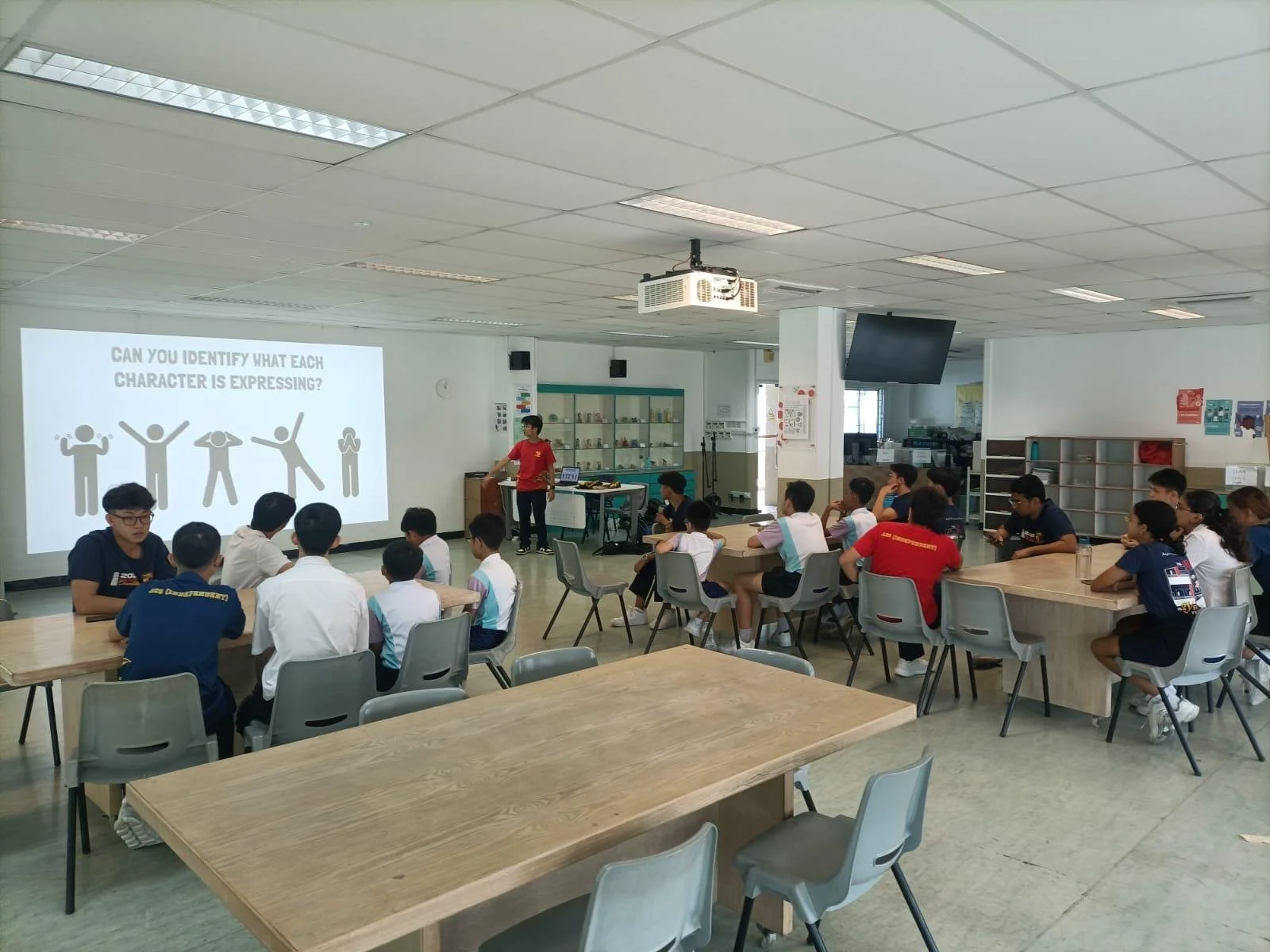
The workshops introduced the tools. The weekly lessons were about learning to use them under pressure. Student leaders practised delivering speeches, analysed their own performance, and gave structured feedback to their peers. The format stayed consistent: hands-on, peer-driven, grounded in practice rather than theory. Students were not just being taught how to speak. They were being given repeated opportunities to discover that they could. By the end of the year, the same students who had never been asked to stand up and speak were independently delivering one-minute presentations, using rhetorical techniques they had made their own. The goal was never just better speeches. It was students who knew they had a voice and were no longer afraid to use it.
The Impact
50
Trained volunteers
100
Students directly reached
>20
Sessions conducted to date
7-18
Age group served