Books
Two books, both published in February 2026, written for readers more than a decade apart. One asks what makes a speech matter. The other asks a five year old at what point something wrong becomes theirs to mention.
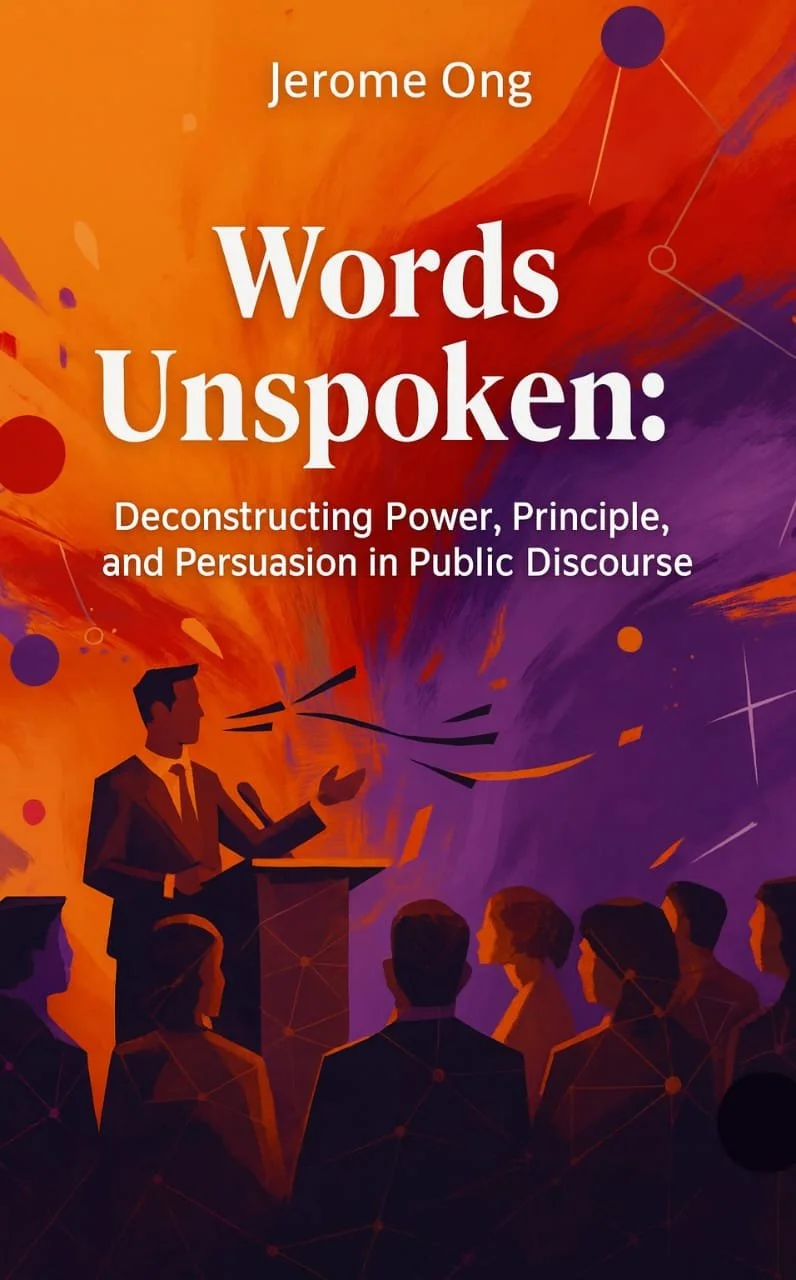
Words Unspoken
Deconstructing power, principle and persuasion in public discourse
I interviewed politicians, journalists, academics and consultants, all people who have had to weigh the cost of words, and asked each of them a question that turned out to be harder than it sounds: what actually makes a speech matter?
The book follows their answers. What separates persuasion from manipulation. How emotional resonance operates in very different political contexts, from Martin Luther King Jr to Lee Kuan Yew. And a quieter thing running underneath all of it: in Singapore, public discourse around race and religion is shaped not only by formal rules but by strong cultural norms. I do not resolve any of that. I name it, and ask what responsibility follows from having a voice at all.
What writing it taught me
Writing Words Unspoken brought into focus something I had been noticing across my community projects. The question of who gets to speak, and who gets heard, is not just a matter of confidence or cultural habit. It is built into systems.
The book explores this through the lens of public life. The community projects explore it through the people sitting across from me. I keep arriving at the same place from both directions.
Reached #1 in Amazon's Hot New Releases for Public Policy in February 2026.
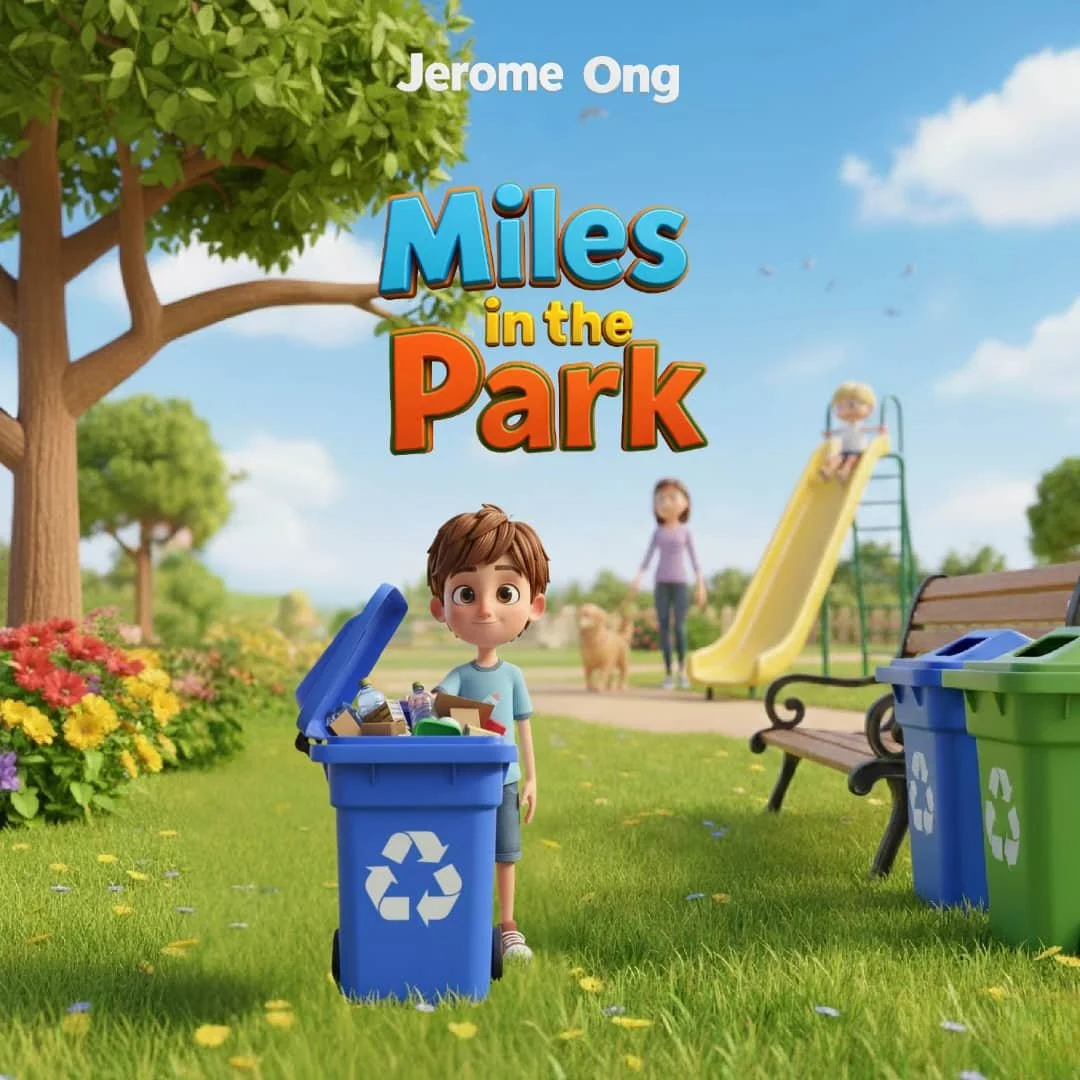
Miles in the Park
A picture book for readers aged 4 to 9
A picture book in read-aloud rhyme. Miles finds litter in his favourite park and decides to say something. A classmate pushes back, and for a moment the doubt is louder than the conviction. A teacher's quiet encouragement is enough to keep him going.
I wanted the environmental theme to stay in the background, as something Miles notices rather than a lesson he is taught. The question I was actually writing about is how early a sense of civic responsibility can begin.
What writing it taught me
Miles is fictional, but the situation he faces is one I recognise. Noticing something wrong, deciding whether to speak up, encountering resistance and continuing anyway. That sequence can play out in real classrooms too.
The book is written for young readers. The question beneath it is not.
Reached #3 in Amazon's Hot New Releases for Children's Social Activism and Volunteering in February 2026.
How the books have been used
This is the part that tests whether they were worth writing. A book's existence makes a claim about its author. A book read aloud in a room of four to six year olds is a claim about the book.
In April 2026, I went back as a guest author for my old pre-school's Book Week. I read Miles in the Park to sixty children aged 4 to 6, at the school where I had once been one of them.
What readers said
“Jerome's anthology reveals his remarkable maturity and passion in the realm of speech and politics, in how he poses incisive questions to seasoned orators and thought leaders. His ability to hold space and extract nuanced reflections is what makes this book an insightful exploration and critical mapping of how public discourse in Singapore is evolving.”
Priscilla Liu, form teacher, Anglo-Chinese School (Independent), on Words Unspoken
“Jerome, my K1 student from Chiltern House Turf Club in 2013, returned as the author of Miles in the Park. Watching him bring it to life during Book Week with such patience and warmth was deeply moving.”
Marhama Zulkifli, pre-school teacher, on the Book Week session
Publication alone is weak evidence of impact. What I can show here is narrower: I finished two very different books, and one of them was read to sixty children at a school that set aside a morning for it. The books exist and the session happened. Whether either of them mattered is the part I cannot show you.