Overseas service
In November 2024 I spent six days in a rural Khmer village in Cambodia, after three months of preparation and fundraising that raised more than SGD 6,000, three times the school's target. The number looked like the achievement. It was only afterwards, back home, that I began asking what success had actually meant there.
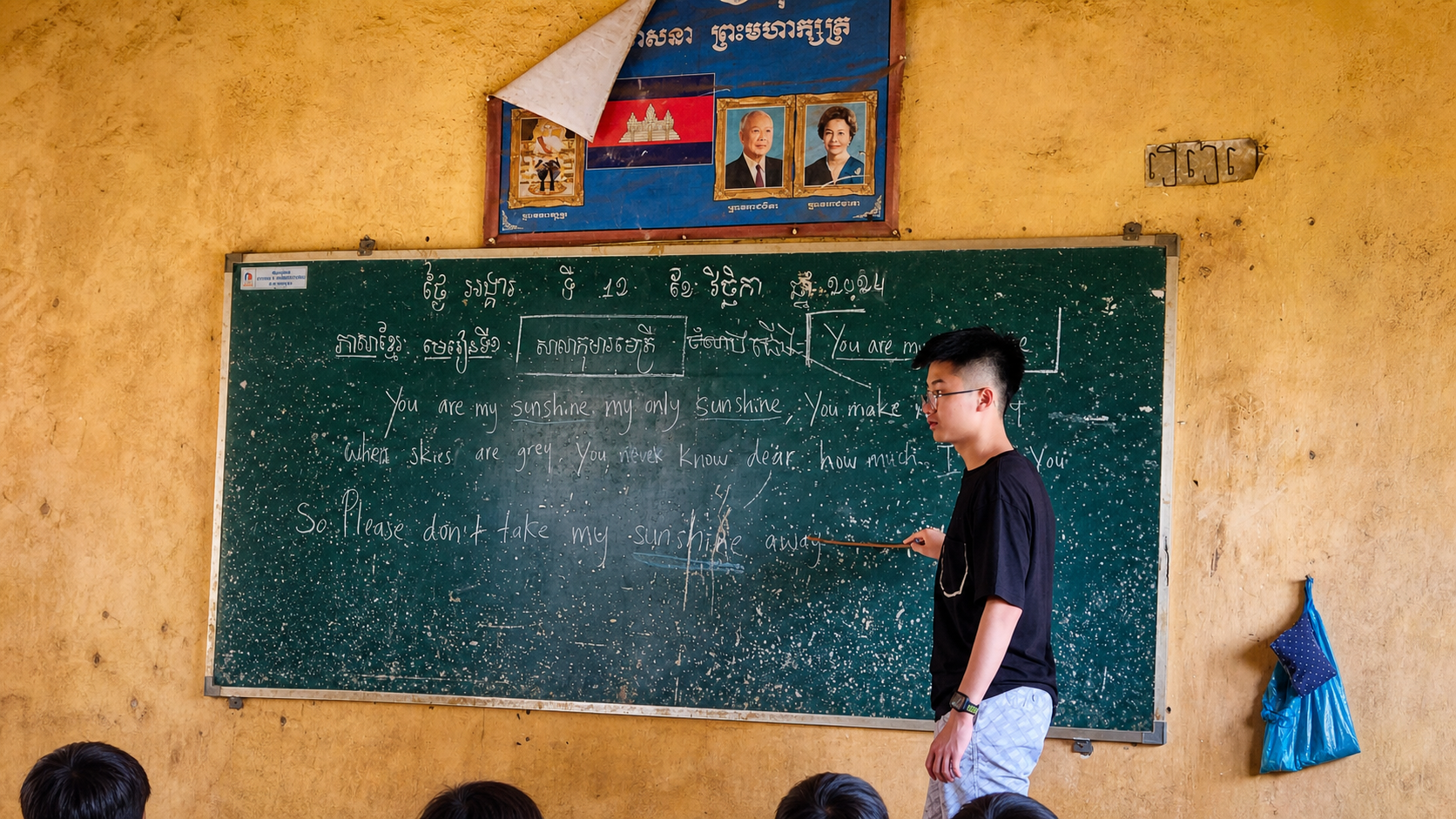
Teaching an English lesson at the village primary school, Cambodia, November 2024.
The count is residents of the households we visited plus pupils taught at the village primary school. No individual is counted twice.
My role
- Led the fundraising team across three months
- Construction work: pathways to newly built wells, solar street lights
- More than twenty home visits with local families
- Prepared the English curriculum taught at the village primary school
- Taught English, hygiene and environment lessons at the school
What I built
Four pathways to newly built wells and six solar street lights, alongside the lessons at the primary school and more than twenty home visits. Those are real outputs. They are also counts of what we did rather than evidence of what changed.
The part I have not resolved is that all of it was conceived and funded from outside the village. The community received what had been built for them. I did not see a process in which residents set what should be built, or held the money to build it. That is not a claim that the infrastructure was unwanted or wrong. It is that the decision about what a place needs sat with the people who raised the money, which is a thing I only noticed once I was one of them.
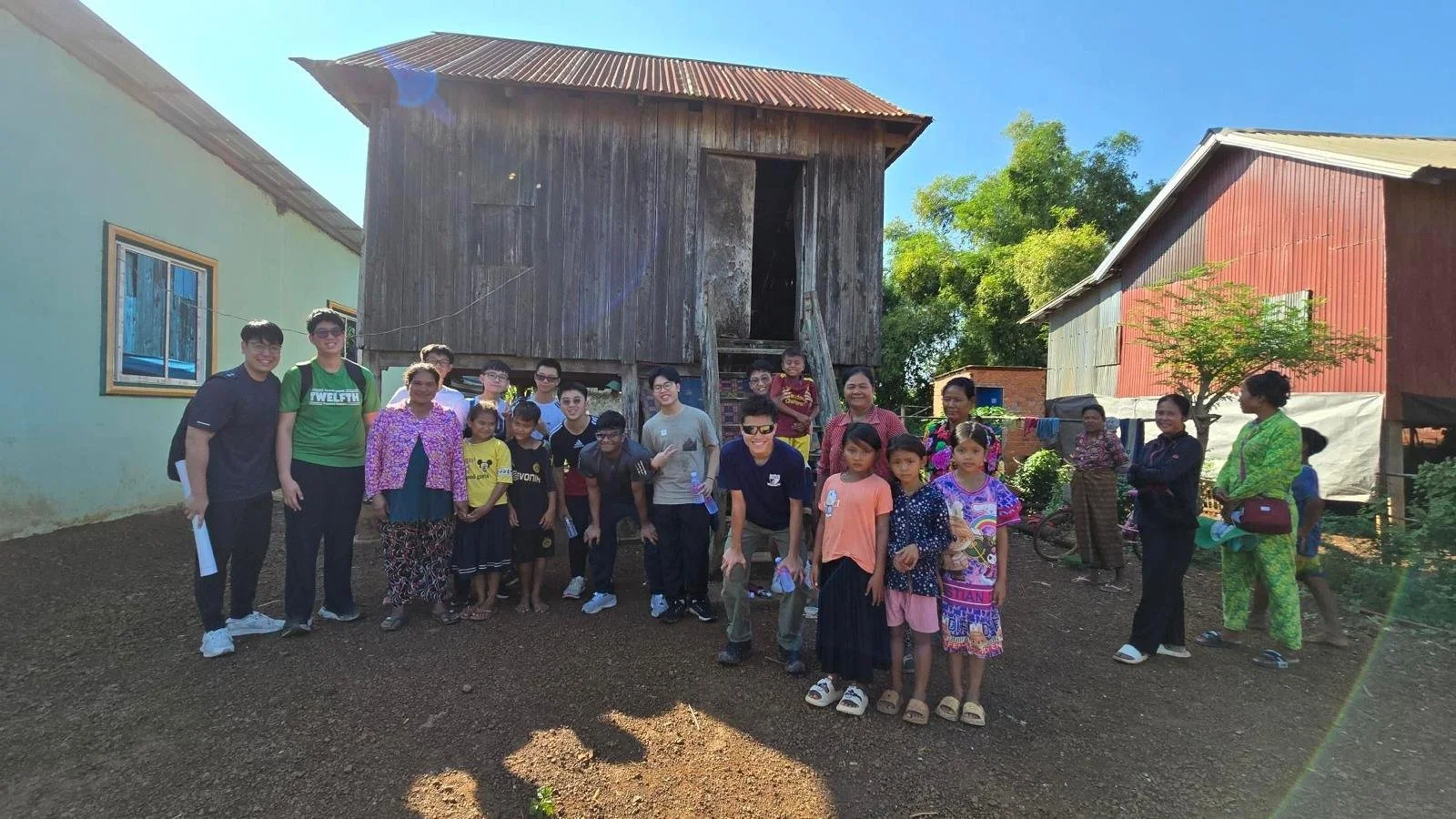
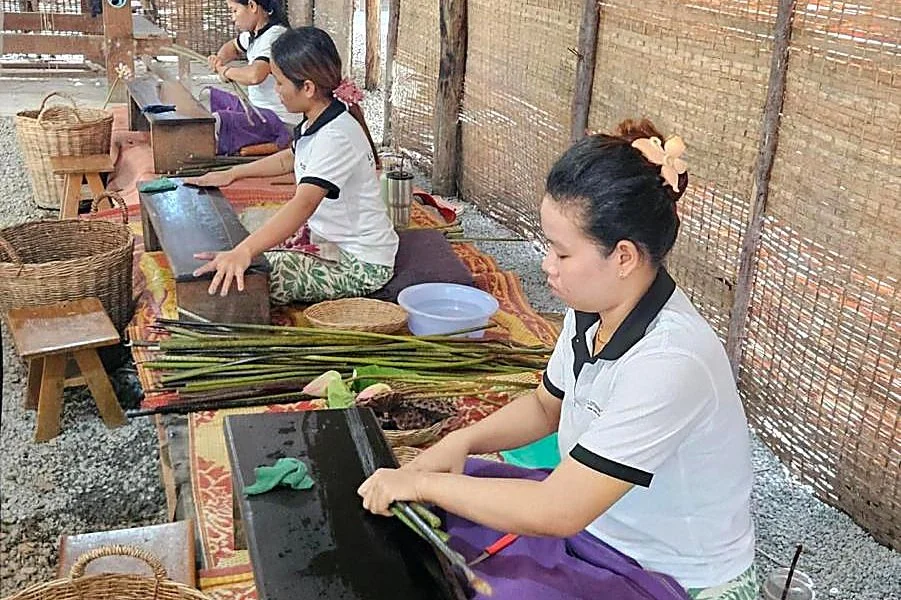
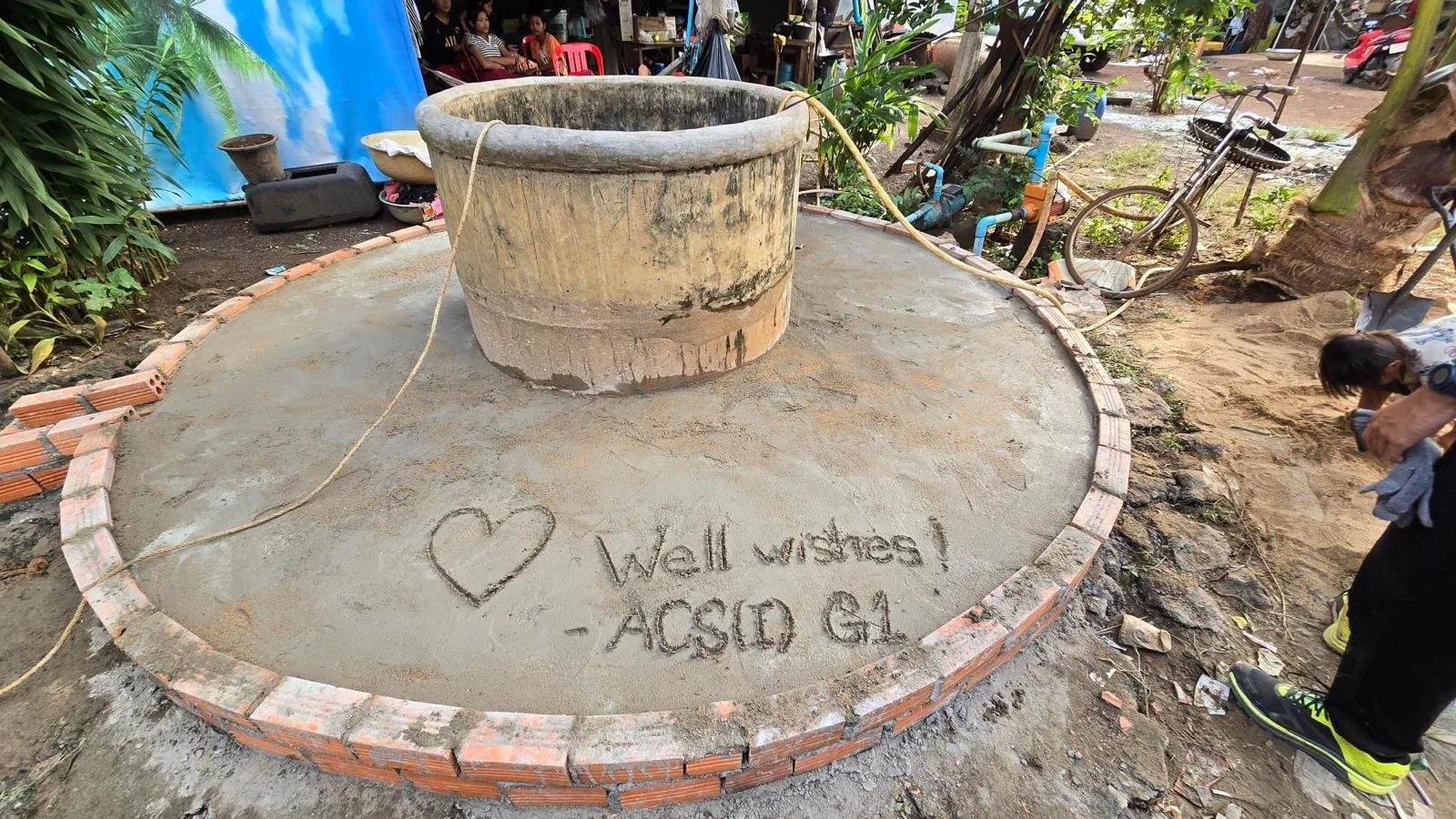
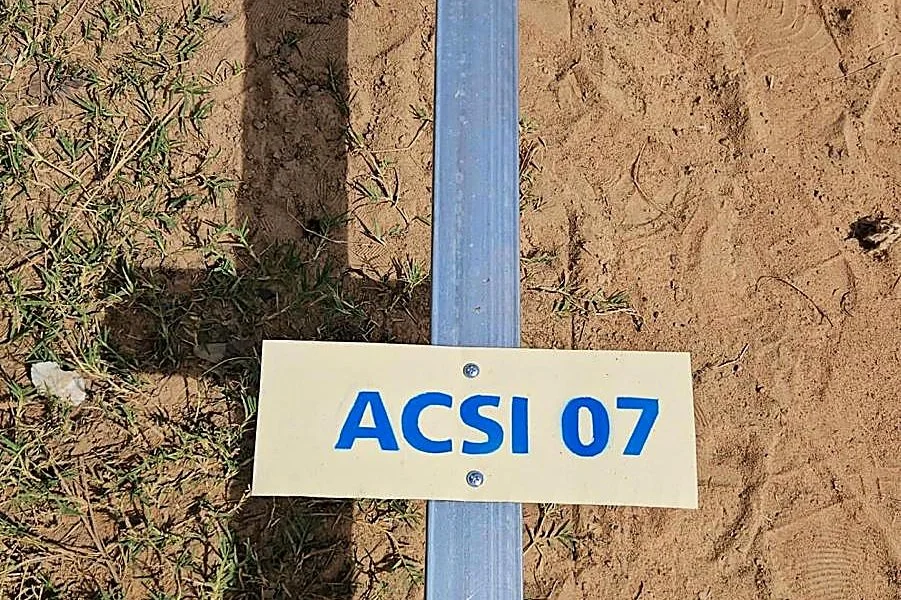
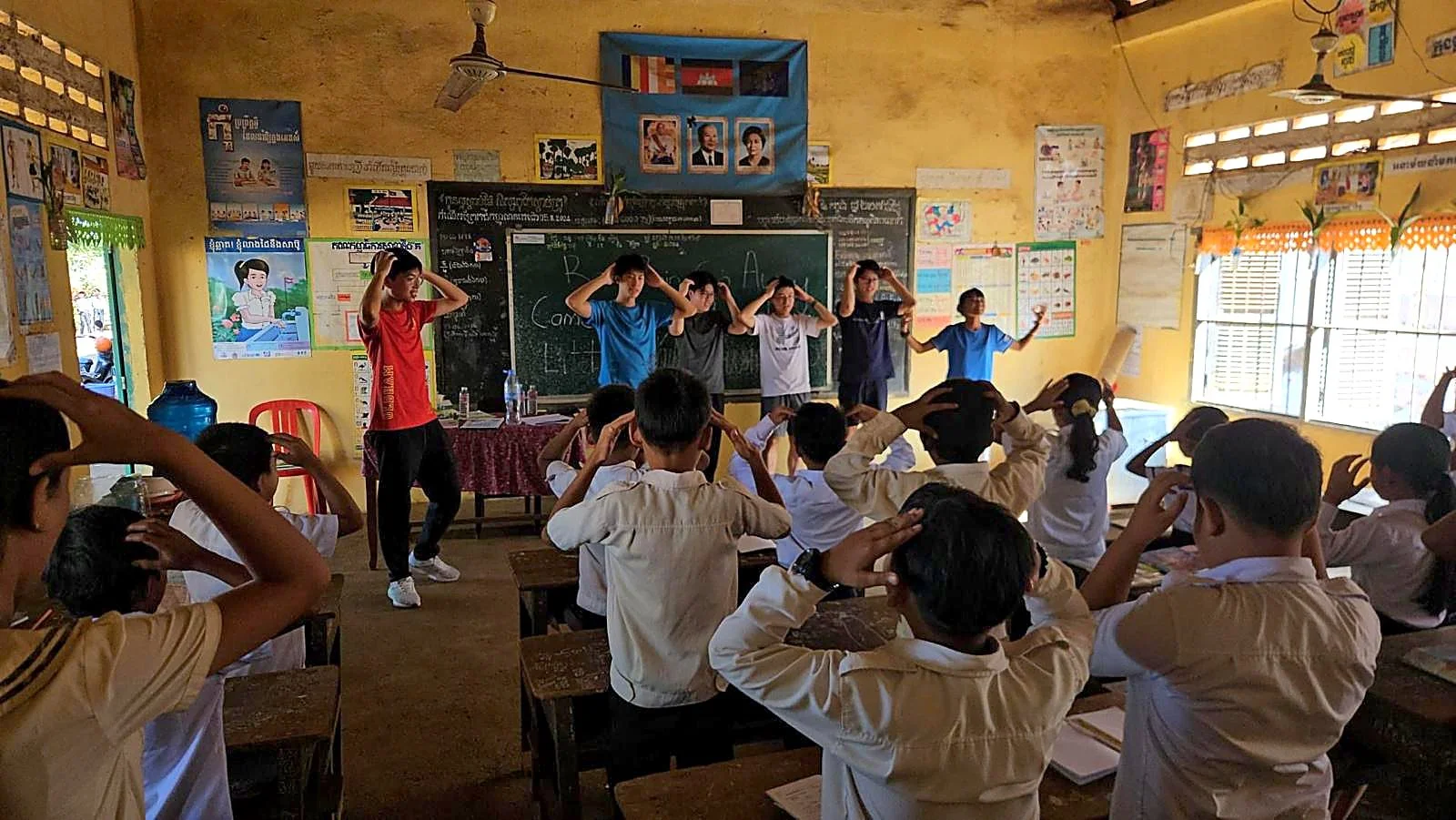
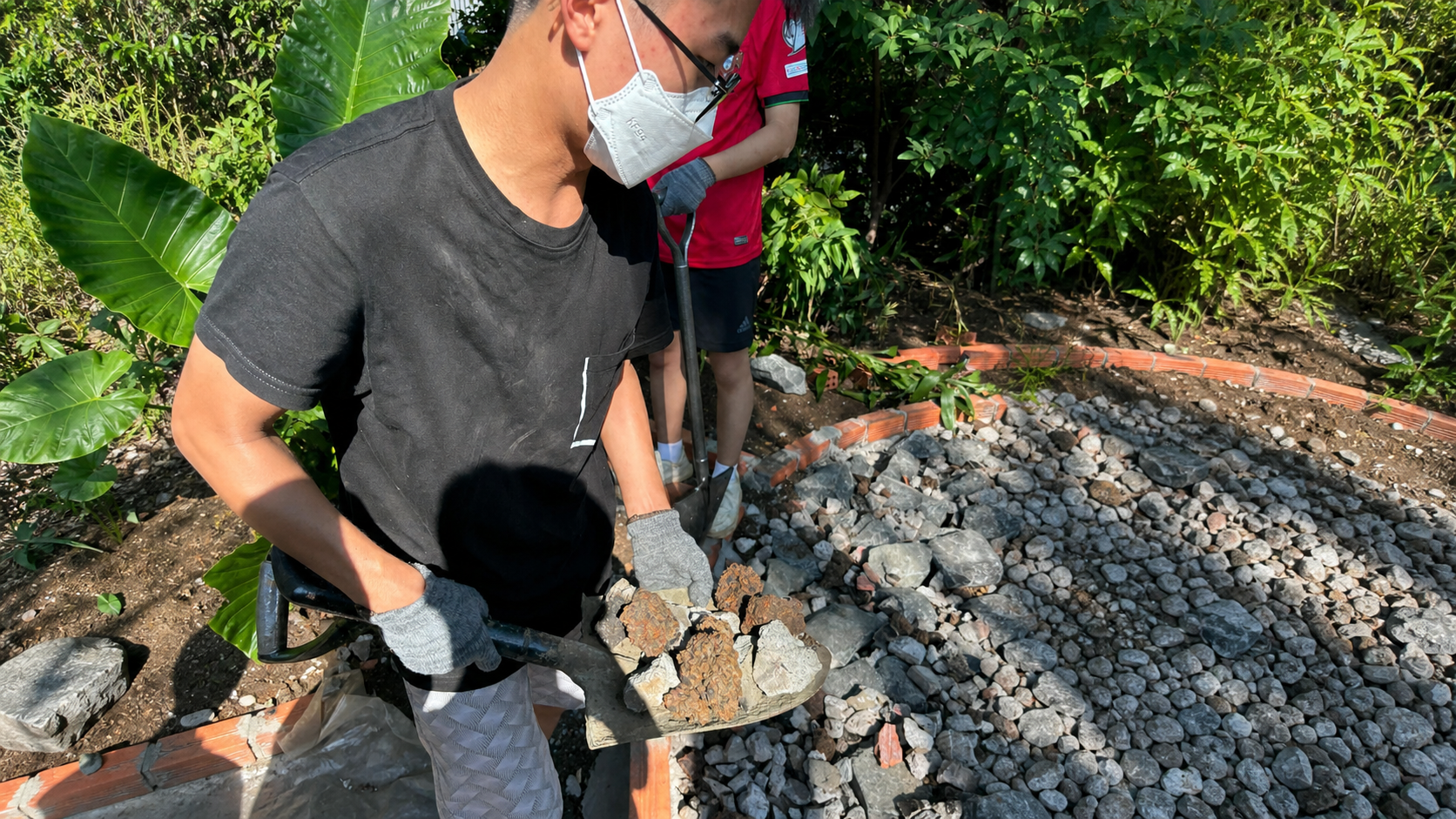
Six days in the Khmer village, November 2024.
What I learned
The families we visited were not waiting to be helped. They were busy, and working things out with a steadiness I had not expected and could not have described at the time. My assumption that we would arrive as the active problem-solvers was the first thing that changed.
The second was about the money. Set a goal, build a team, hit the number: that part I understood. What nobody asked, including me, was what the money should be for. The fundraising target was the thing we optimised, but it had been set by the same group that chose the projects.
The third was the classroom. The English lessons stayed with me, not because they were especially well taught but because of what English opens for a child growing up there: tourism work, cross-border opportunity, the ability to deal with a wider world on something closer to equal terms. That was the same access question I had been working on at home, in a place I had assumed had nothing to do with it.
Written by the accompanying staff after the trip. It records what they saw across three months of fundraising and preparation and six days in the village.
TESTIMONIAL
Jerome was a crucial member of the Cambodia Overseas VIA in 2024, demonstrating unwavering commitment throughout the planning and execution of activities for the Cambodian children. He approached every responsibility with enthusiasm and diligence, ensuring that each programme was meaningful and engaging. Guided by a genuine desire to serve, Jerome consistently prioritised the needs and well-being of the children above his own, embodying the true spirit of service. His warmth, compassion and ability to connect with others brought immense joy to the children, leaving a lasting impact on the community and his fellow participants alike.
Benjamin Wong, Director, Partnership and Talent Development, Anglo-Chinese School (Independent)
What I am investigating next
The English lessons cost nothing beyond the time of people who were already there, and they were the part I most wanted to continue. The money was spent on the wells and the lights. The lessons ended when the plane left.
I prepared the curriculum for the six days we were there, and whether any of it is still taught is not something I can find out from here. Six days is long enough to frame a visit and far too short to sustain teaching. The question is whether English lessons can continue beyond a trip rather than being contained by one.