Project Reperio
Project Reperio runs on Zoom calls and mobile data. Its students are refugees aged 14 to 18 in Johor, Malaysia, most of them Rohingya, taught at learning centres run by Cahaya Surya Bakti. Shut out of public schooling, they depend on a working phone and a signal to reach structured learning at all.
The project began in 2020, after Covid suspended overseas service trips. I joined its executive committee in January 2025.
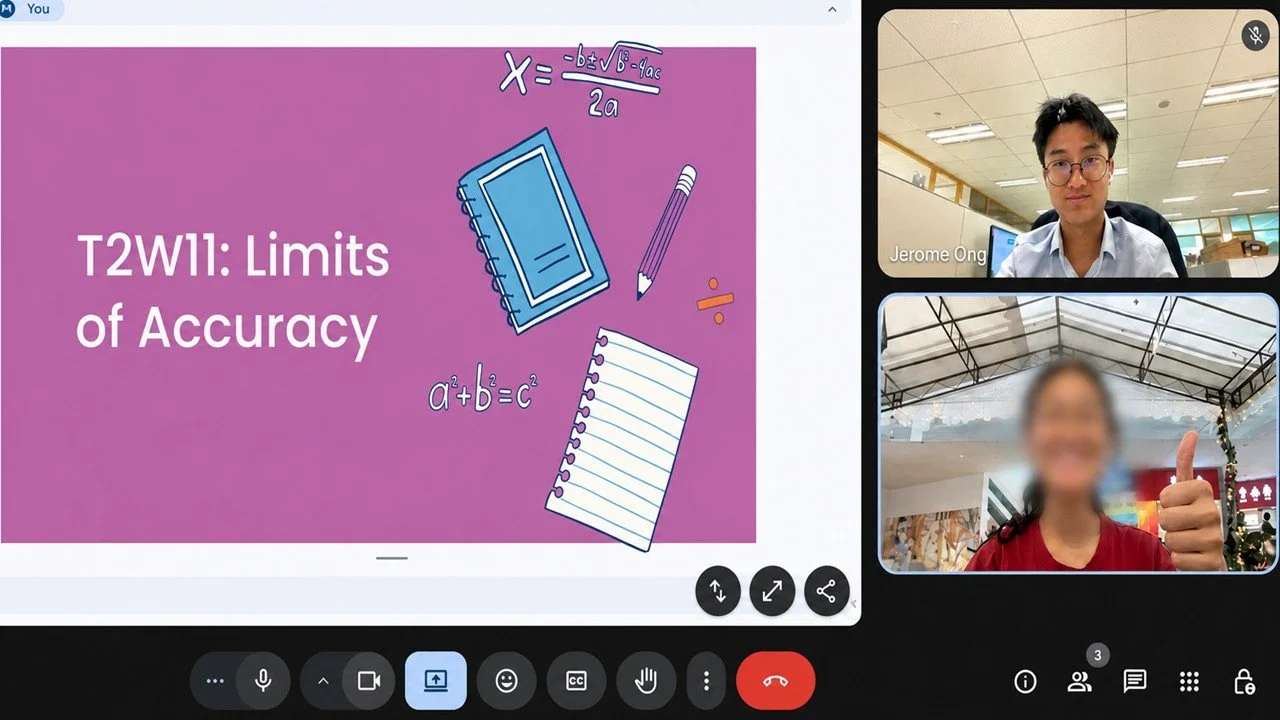
A weekly lesson on the academic track, 2025.
The student count includes everyone enrolled across both tracks since I joined in January 2025. The session count includes lessons delivered by the volunteer team over the same period. Neither figure measures what anyone left with.
My role
- Head of Publicity: managed Instagram, fundraising campaigns and external communications
- Tutor on the academic track, mathematics and English
- Ran the Reperio Roses fundraiser: close to SGD 1,000 in 2025, close to SGD 2,000 in 2026
What we built
The programme runs weekly on two tracks with Cahaya Surya Bakti, which operates schools for refugee students across five towns in Johor. The academic track covers mathematics and English. The practical track covers coding, video editing and using AI tools such as ChatGPT. The second track exists because we asked what would be useful beyond academic knowledge. Because formal employment options are heavily constrained, it focuses on skills that may be usable in the work students can access.
The fundraiser is the part I did not expect to matter most, and it is the part I ran. On Valentine's Day 2025 we sold roses on campus, raised close to SGD 1,000 and sent all of it to Cahaya Surya Bakti for mobile data. I thought it was an odd call at first. Then I realised our programme exists entirely on Zoom: if a student cannot get online, nothing else we teach reaches them. Data is not a nice-to-have; it is the entry point. Reperio Roses ran again in 2026 and raised close to SGD 2,000.
Teaching online rewrote most of what I assumed about explaining things. No whiteboard, no crouching next to someone who is stuck, no reading the room. Real-life examples became the whole method: negative numbers made sense once we put them in terms of money owed, because that was already familiar.

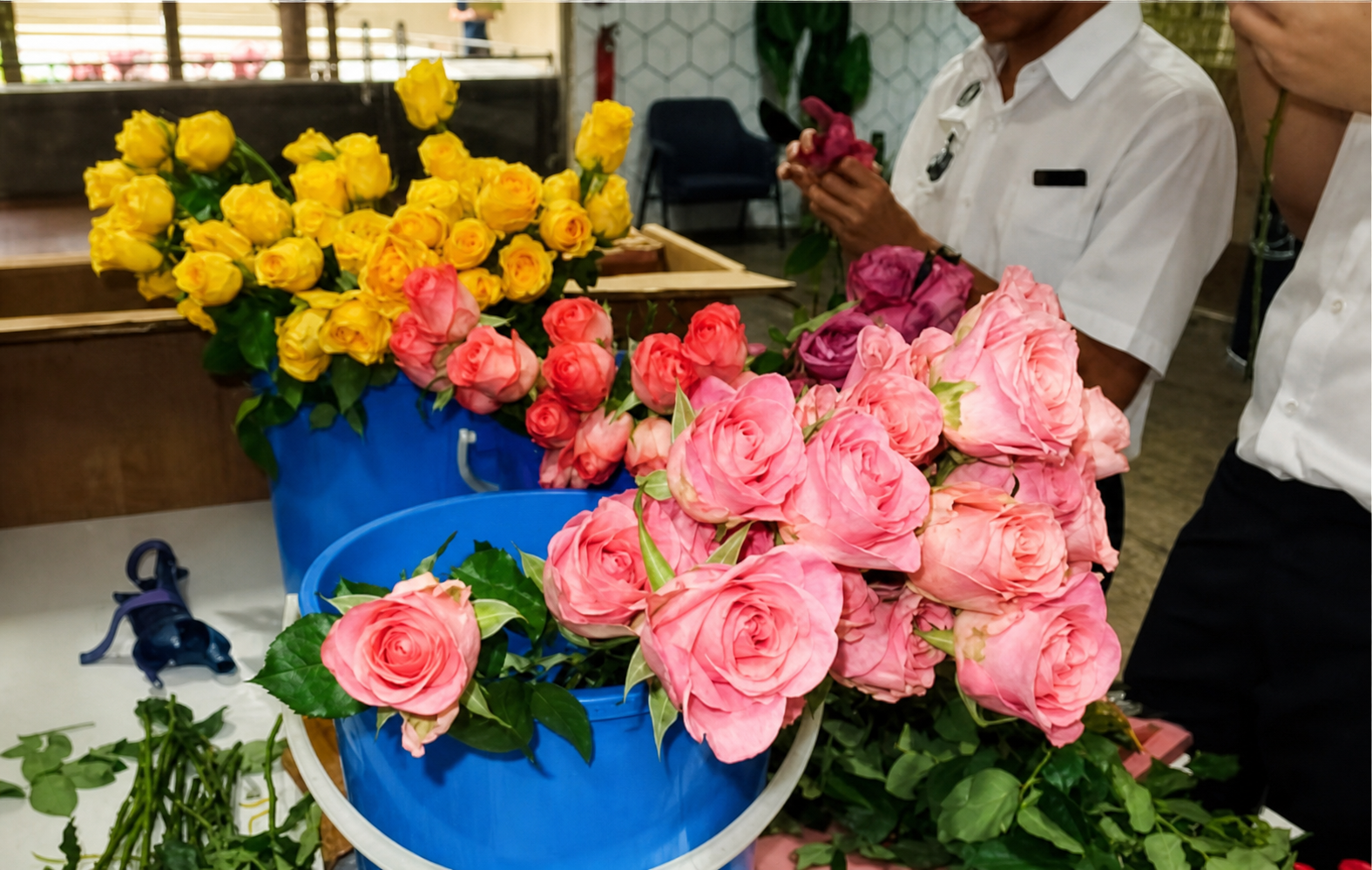
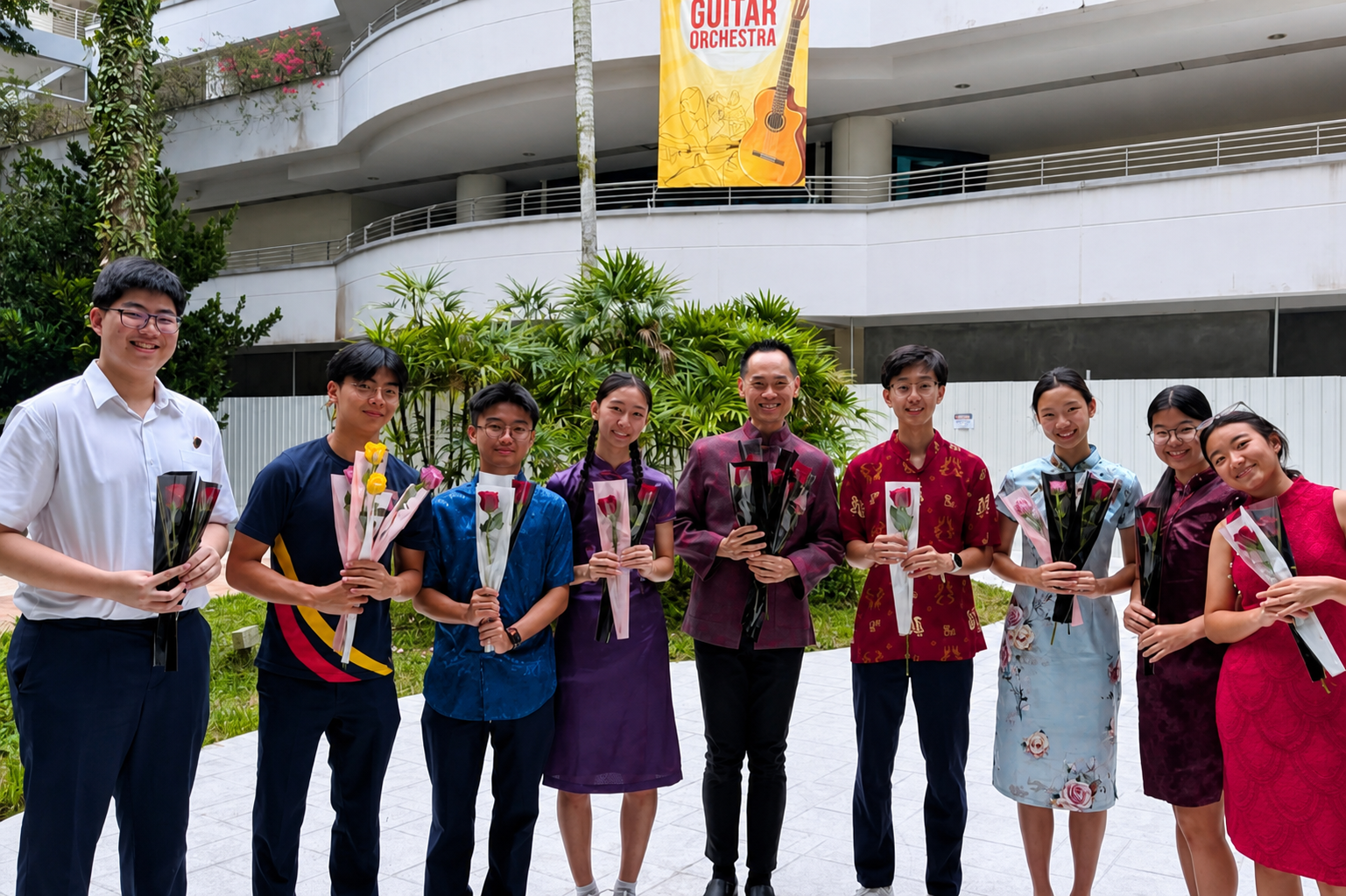
Reperio Roses, our Valentine's Day fundraiser, 2025 and 2026.
What I learned
I had always assumed the important part of a programme was the content, the lesson plan, the curriculum, the skills being taught. Reperio made me see that none of it counts if the person cannot get through the door, and that the door is sometimes a data plan. Infrastructure decides who reaches the content before anyone has written a word of it.
The second thing is about who does the deciding. Writing the external account of Reperio kept returning me to a question about our own programme: who chose which skills we teach, and on what basis? We did. Nobody who would have to use them was in the room when we chose.
What I am investigating next
I do not yet know what changes for a student after the programme ends. With Cahaya Surya Bakti, I want to establish whether follow-up is possible at all, and what the training is worth relative to the work students can actually get in Johor.
A second question concerns sustainability. Diaspora networks and market-based models could make the work less dependent on donor attention. They could also repeat the same error: decisions made at a distance by people who will not live with the consequences. Which it becomes depends on who is in the room when the model is designed.
Malaysia has no domestic refugee law, and refugees have generally been unable to work lawfully. That is changing: the government launched a registration scheme in January 2026, and the Home Ministry has said registered refugees will be allowed to work in Peninsular Malaysia. So far it has reached fewer than a hundred people, most of them in detention. Either way, training that connects a student to work does not by itself secure the protections that come with it, which is the central difficulty with a business model here. Before proposing one, I need to know where our students actually go after they leave.
IN PARTNERSHIP WITH